

Prostate Health: A Practical Guide
This guide provides clear and actionable steps based on peer-reviewed research to help you understand your prostate health and how to manage it.

Maintaining prostate health
Maintaining prostate health is essential for men’s overall well-being. Being proactive about your health reduces the risk of prostate cancer. Annually, almost 50,000 men in the UK alone receive a diagnosis of prostate cancer, and about 12,000 die of the disease. Approximately 510,000 men are either living with or have survived prostate cancer. According to statistics, one in eight men will receive a diagnosis of prostate cancer during their lifetime.
1. What is the prostate?
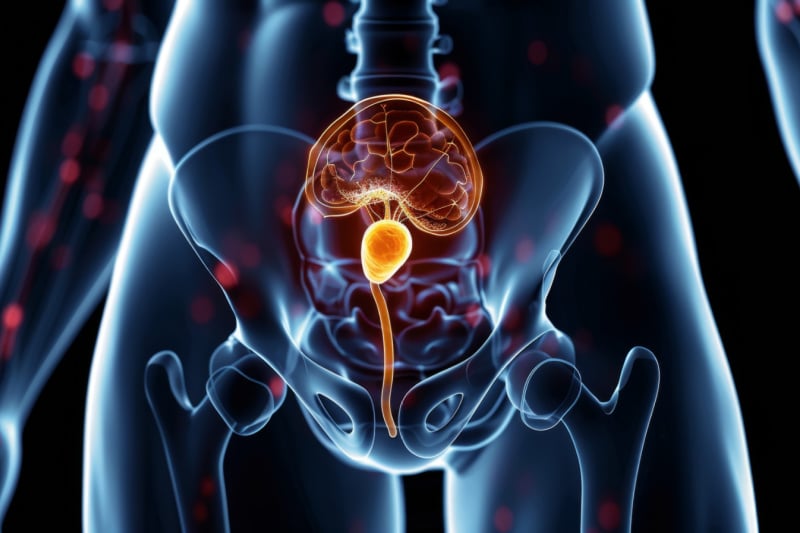
- The prostate is a small gland in men located under the bladder and surrounds the urethra. The prostate is a major component of the male reproductive system, which produces seminal fluid that helps to transport sperm. The prostate is usually the size of a walnut for men in their 20s and 30s. The prostate begins to grow bigger starting from the early 40s and can reach the size of a grapefruit or lemon by the age of 60.
- Prostate problems can impact your sexual life and may also cause urination problems. The extent of sexual problems differs according to the prostate condition. These issues may include problems maintaining an erection, reduced sexual satisfaction, erectile dysfunction (ED), and low sex drive. However, these problems depend on certain factors such as genetics, age, or whether someone suffers from anxiety.
2. Recognising Common Prostate Conditions
Benign Prostatic Hyperplasia (BPH)
- BPH is a non-cancerous prostate enlargement
- The signs include frequent urination, poor urine flow, and difficulty starting urination.
- Treatment options include: surgery, medications, and lifestyle changes.
Prostatitis
- Infections are often the cause of prostatitis, or inflammation of the prostate.
- Symptoms include pain in the pelvic area, flu-like symptoms, and painful urination
- Treatments include anti-inflammatory medications and antibiotics
Prostate cancer
- It is the most prevalent cancer in men worldwide.
- Risk factors include race, age, and family history
- While there may be no symptoms in the early stages, bone pain or bladder issues may occur later.
3. Screening. Early Detection and Diagnostic Tests for the Prostate
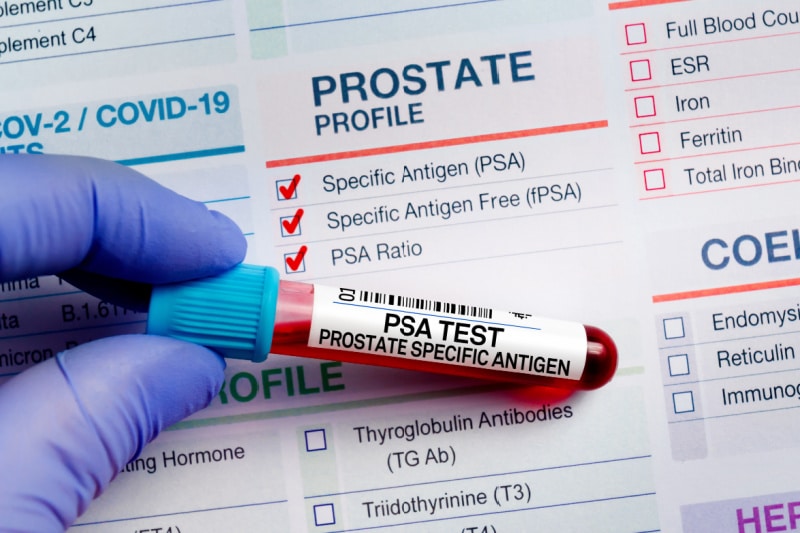
Prostate-Specific Antigen (PSA) Test:
Measures the levels of PSA in the blood:
- PSA levels, which are raised, can be a sign of BPH or prostatitis, but they can also be an indication of prostate cancer.
- Screening recommendations may vary with age. In general, males between the ages of 55 and 69 are advised to discuss with a health provider the potential benefit of a PSA blood test. Routine screening is not generally recommended for men under the age of 55 or over 70.
Cystoscopy:
- To visually examine the bladder and prostate, a tiny tube equipped with a camera is placed into the urethra.
Prostate biopsy:
- Under a microscope, tissue samples are extracted and examined. Usually used to confirm malignancy following abnormal imaging or PSA results.
Digital Rectal Exam (DRE)
- Physical assessment to identify anomalies, frequently used in conjunction with PSA tests, is DRE.
Imaging: Ultrasound and Its Effectiveness
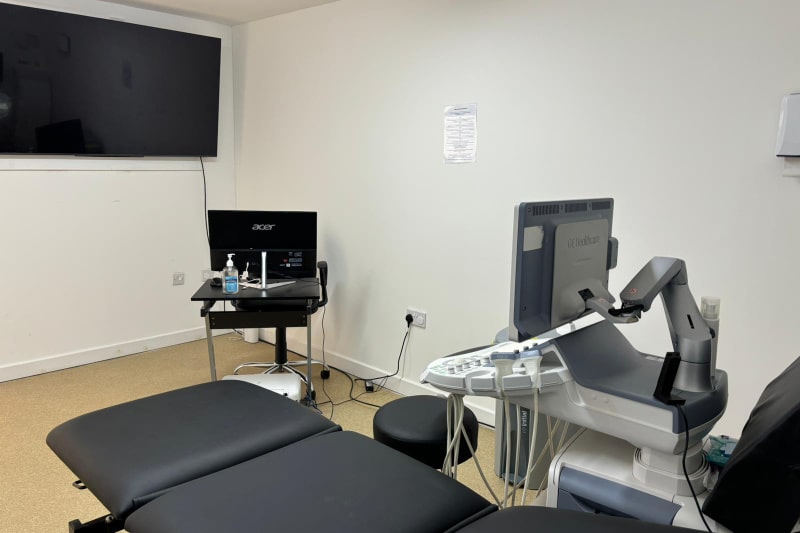
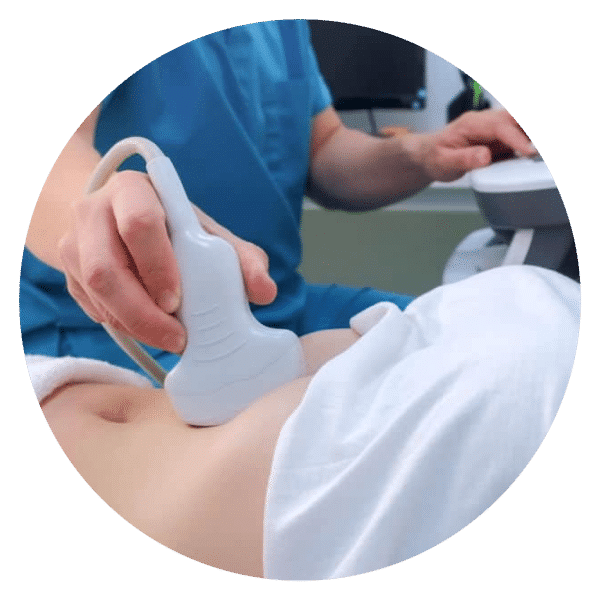
Scrotal Ultrasound Scans at Universal Ultrasound Diagnostics are a non-invasive way to examine the prostate.
It is frequently used when the results of a DRE or PSA are inconclusive
- Transrectal ultrasonography (TRUS) provides fine-grained images of the prostate’s size and shape.
- A small probe is placed into the rectum to view the prostate; it is frequently used to guide prostate biopsies and can help identify areas of concern for targeted sampling.
TRUS is effective for:
- Assessing benign enlargement
- Detecting hypoechoic (darker) lesions associated with malignancy and measuring
- Prostate volume
Advanced Imaging
- AI-enhanced micro-ultrasound and MRI can be performed to improve detection accuracy. arxiv.org
- Higher resolution imaging than standard TRUS enables real-time targeting during biopsies.
- Demonstrates enhanced specificity and sensitivity in identifying clinically significant prostate cancer.
- Biopsies need to be performed less frequently.
- A recent study found that AI-enhanced micro-ultrasound was more accurate at diagnosing conditions than normal biopsies alone.
Compared with MRI:
- MRI is recommended for a more thorough assessment since it offers superior soft tissue contrast.
- Ultrasound is more affordable, quicker, and more widely available.
- Overall of cancer detection is increased by combined methods (MRI + TRUS connected biopsy).
4. Risk Factors:
Modifiable risk factors:-
- Lack of exercise and being obese increase the risk
- Higher prostate cancer rates have been linked to exposure to certain pesticides
- Whilst an enlarged prostate is usually normal for older men, a diet high in saturated fats and free radical damage caused by the environment can contribute to prostate issues.
Preventive Measures
- Frequent exercise
- Reducing consumption of red meat and high-fat dairy products
- Maintaining a healthy diet rich in antioxidants, fruits, vegetables, and foods with omega-3 fatty acids.


5. Treatment Options BPH treatments
- Medications such as 5-alpha-reductase inhibitors and alpha-blockers can be prescribed by your doctor
- Transurethral Resection of the Prostate (TURP) is a minimally invasive procedure that can be performed
- In extreme circumstances, surgery may be recommended
Prostate cancer treatments
- Prostatectomy may be performed
- For low-risk cases, surveillance may be recommended
- Other treatments include radiation, hormone therapy and chemotherapy for the advanced stage.
6. Stay Informed
- Routine examinations by medical professionals.
- Notify your GP if there are any changes in sexual function or if you are experiencing urinary problems
- Keep abreast of the most recent screening recommendations and treatment options.
The Harms And Limitations Of All Screening Include:
All screening can do harm as well as provide benefits. Good screening does more good than harm.
Screening tests are not 100% accurate and do not provide a diagnosis. Tests may not always provide reliable or clear-cut answers. They can lead to false reassurance, false alarms, and the discovery of uncertain findings.
False positive results are inevitable in screening. This occurs when a screening test indicates a possible condition, but subsequent tests confirm there's no issue. This can cause undue anxiety and necessitate additional tests and investigations, which may pose risks of complications.
False-negative results are also inevitable in screening. This is when a condition either currently exists or is imminent, yet the test outcome appears as normal. Consequently, individuals might be falsely reassured and could overlook potential signs or symptoms later on, assuming that everything is well. This may result in delays in both diagnosis and treatment.
Screening can result in overdiagnosis and overtreatment, whereby conditions are detected that would not have posed a problem during an individual's lifetime but, once identified, necessitate treatment. Consequently, individuals undergo unnecessary treatment, sometimes experiencing complications from medications or surgical procedures.
Ultrasound cancer screening conclusion
In Conclusion, Ultrasound cancer screening is a valuable tool for early detection and monitoring. By understanding its benefits and knowing when to seek screenings, individuals can take proactive steps toward better health.
It's easy to book an appointment.
Universal Ultrasound Diagnostics offers an online booking system for easy appointment scheduling. There are options for walk-ins depending on availability: urgent scans within 5 days and routine scans within 14 days.
Appointment notifications and reminders are sent via email. The system supports self-check-in and online referrals by GPs.
We provide chaperones and interpreting services and allow family presence during pregnancy scans.
Our facility is accessible by public transport and has parking.
We allow family presence for most scans; however, children are not allowed in the room for certain scans. Please check your appointment confirmation email for clarity on our safety policy.
Our FAQ page answers a lot of general questions about your scan.
There is parking around The Green or Pay & Display at the side of The Bulls Head Pub, which charges £1 per hour (cash and card accepted). We are open 8 am to 11 pm Monday to Sunday.
Opening Times
Monday to Sunday
8 am – 11 pm
Location
10c The Green, Kings Norton, Birmingham, B38 8SD

GP and Self Referral Links
ACCREDITED & TRUSTED





Trusted Partnerships Supporting Your Health