
Thyroid Ultrasound Scan Worcester
Private Thyroid Ultrasound Scans Near Worcester
Thyroid & Neck Scans Near Worcester
A private ultrasound thyroid gland scan is a non-invasive and painless imaging test that uses sound waves to create pictures of the thyroid. It can help detect abnormalities, cysts, lumps, masses or infections, and evaluate the overall health of the gland.
Some reasons for a private Thyroid/Neck Ultrasound scan are:
- Assess if a thyroid nodule has significantly grown over time
- To analyse the appearance of thyroid nodules and determine if they are benign nodules
- To assess any abnormal lymph nodes near the thyroid.
- To determine if a lump in the neck is arising from the thyroid or an adjacent structure
- To assess a thyroid that feels big or irregular, called a goiter
- To look for any additional nodules in patients with one or more nodules felt on physical exam
The Neck scan is to assess the area under and around the jaw.
The scan assesses:
- Submandibular glands, which sit under the jaw
- Parotid glands, which sit near the angle of the jaw and cheek
- Lymph nodes under the jaw and in the upper neck
- Soft tissue lumps, swelling, cysts or inflammation around the jawline
- Salivary gland stones or duct swelling

Thyroid Ultrasound Scan
At Universal Ultrasound Diagnostics, our dedication lies in delivering exceptional private thyroid ultrasound scans from our ultrasound clinic in Birmingham, UK. We offer flexible and convenient dates and times that suit your needs and preferences.
With our cutting-edge ultrasound systems and highly skilled, qualified and experienced staff, we deliver precise and reliable imaging for both our private clients and referring practitioners in a comfortable and discreet setting.
Our commitment to utilising the latest technology ensures we consistently deliver the highest quality performance you can trust.
Thyroid & Neck Scan Timeline & Cost
Typical Cost
You can see our latest rates on our booking page.
Scan Time
This scan can take 30 - 50 minutes.
Results
The sonographer will discuss any immediate findings with you, and the report and images will be emailed to you on the same day.
An ultrasound scan alone cannot be used to diagnose disease or cancer and must be used in conjunction with other diagnostic tests.
SAME-DAY PEACE OF MIND THYROID SCAN
We provide a reassuring, fast, and easily accessible imaging diagnostic service for individuals who are concerned about the health of their thyroid. Our services offer same-day scans, and there are no waiting times, thereby alleviating your anxiety. The scan is performed by experienced and highly qualified sonographers. A GP referral is not required, as long as your symptoms justify this type of ultrasound scan. The scan is particularly beneficial for individuals who are experiencing symptoms such as neck swelling, difficulty swallowing, difficulty conceiving/getting pregnant, shifts in mood, and changes in weight, as well as individuals with a family history of thyroid problems.
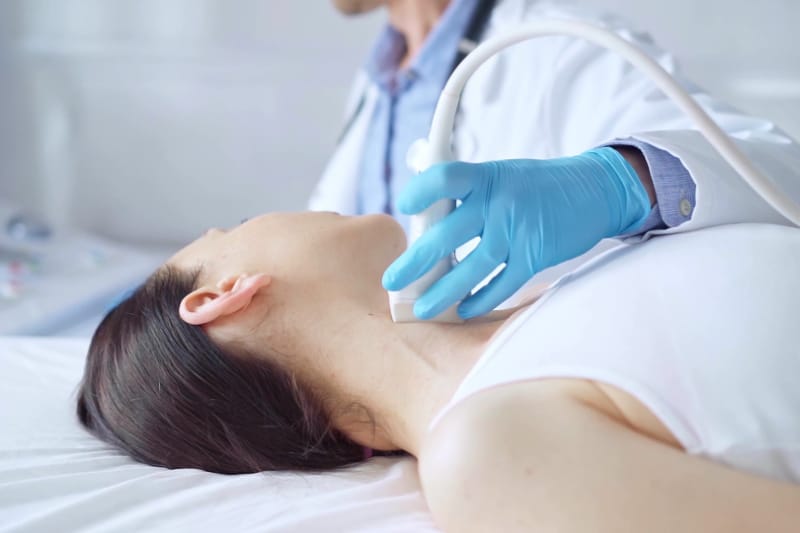
The scan is painless; however, you may feel a bit uncomfortable as the sonographer may apply a bit of pressure to obtain good images. The scan is non-invasive and usually is completed within 20 to 30 minutes, often accompanied by a consultation to explain the scan findings. A comprehensive report and images are emailed to you on the same day.
Whether it is for your peace of mind, early detection, or follow-up, our service empowers patients with timely, expert insights to support informed decisions about their health.
Paediatric thyroid scans near Worcester
A paediatric thyroid ultrasound is used to evaluate the thyroid gland’s size, shape, location, and thyroid function in children.
The thyroid is a butterfly-shaped gland in the neck that produces the thyroid hormones triiodothyronine (T3) and thyroxine (T4), that are essential for controlling growth, metabolism, and brain development. Usually, this scan is requested when structural problems are suspected or when there are any clinical concerns regarding the thyroid or neck.

What is a thyroid nodule?
A thyroid nodule is a growth or small lump that can develop within the thyroid gland. Nodules are usually non-cancerous and are very common. Nodules can be found during screening or a routine health check-up. Characteristics of Thyroid Nodules.
Causes of thyroid nodules
- Iodine deficiency.
- Cysts can lead to nodules.
- Overgrowth of normal thyroid tissue.
- Family history.
- Inflammation of the thyroid gland (thyroiditis).
Thyroid Nodules Characteristics
- Thyroid nodules can be filled with fluid (Cystic), solid, or calcified.
- Several nodules may be indicative of an enlarged thyroid.
- Colloid Nodules are non-cancerous.
Nodules: Possible Symptoms
- Neck swelling
- Changes in your voice
- Bump or lump on the neck
- Tightening in your neck
- Swallowing problems
- Hormonal production affected by nodules may present as either an overactive - or underactive thyroid

A private ultrasound scan of your thyroid near Worcester is a great way to determine if any lumps or symptoms need further investigation.
Meet the Team
Lydia, our CQC Registered Manager and Operations Director, leads the team with empathy, faith and the utmost integrity. Her patient-focused approach helps to shape the culture of our service.
Our Consultant Radiologist Dr Moti, is supported by our advanced sonographer Andrew, combine clinical excellence with reassurance, giving our patients peace of mind and genuine warmth. Ali brings clarity to every scan and calm assurance, helping patients feel at ease, supported, and well-informed.
Behind the scenes, Emma, our practice manager, plays a pivotal role, ensuring every detail of the patients’ journey is seamless. She works alongside the Registered Manager to ensure quality assurance is maintained.
Carly, our Medical Administrative Officer, plays a crucial role in patient experience and works alongside the Registered Manager to maintain high-quality standards through promoting continuous improvement across the practice.
Together as a team, we are united by one purpose:
Our Mission - To deliver high-quality care with compassion that not only meets the patients’ expectations but goes over and beyond to exceed expectations.

Why Choose Our Private Ultrasound Scan Clinic?
1. Expert Sonographers: Our clinic boasts highly skilled and experienced sonographers specialising in Diagnostics and Pregnancy scans.
2. State-of-the-Art Technology: We use cutting-edge ultrasound systems for precise and reliable imaging.
3. Comfortable and Discreet Setting: Our clinic ensures a comfortable and confidential patient environment.
4. Flexible Appointments: We offer flexible dates and times to suit your convenience.
5. Prompt Results: Immediate findings are discussed during your appointment, and a detailed report and images are emailed to you the same day.
Our Mission, Vision And Values
Mission - To be the most efficient and preferred diagnostic imaging centre that provides excellent quality care, that not only meets but goes above and beyond to exceed patients’ expectations.
Vision - Our vision is innovation as healthcare and technology are continuously evolving, which will enhance scanning techniques, image quality, accuracy, and efficiency and provide clearer insights into diseases.
We are proud to be a compassionate, caring, and respectful team. We do this by asking staff to work within our core values:

Compassionate by being inclusive, attentive, caring, respectful and showing kindness to staff, our patients, and their families.

Caring by going beyond compliance, performing above and beyond to improve our services and providing person-centred care by involving patients in their care, offering choices, and promoting dignity and privacy.

Respectful by active listening, seeking to understand others, showing empathy for differences, apologising when things go wrong, being polite and showing gratitude to our staff and patients.
It's easy to book an appointment.
Universal Ultrasound Diagnostics offers an online booking system for easy appointment scheduling. There are options for walk-ins depending on availability: urgent scans within 5 days and routine scans within 14 days.
Appointment notifications and reminders are sent via email. The system supports self-check-in and online referrals by GPs.
We provide chaperones and interpreting services and allow family presence during pregnancy scans.
Our facility is accessible by public transport and has parking.
We allow family presence for most scans; however, children are not allowed in the room for certain scans. Please check your appointment confirmation email for clarity on our safety policy.
Our FAQ page answers a lot of general questions about your scan.
There is parking around The Green or Pay & Display at the side of The Bulls Head Pub, which charges £1 per hour (cash and card accepted). We are open 8 am to 11 pm Monday to Sunday.
Opening Times
Monday to Sunday 8 am - 11 pm
Location
10c The Green, Kings Norton, Birmingham, B38 8SD

Thyroid Scan Faqs
What is a Thyroid scan?
Thyroid ultrasound scans are a type of scan used to look at the thyroid gland of the neck. Ultrasound uses high-frequency sound waves to build a 2D image of soft tissue within the body. Thyroid ultrasound scans can be used to diagnose a number of ailments including tumours and cysts.
Schedule an appointment for a private ultrasound thyroid scan at our clinic near Worcester
Why should I have a private Thyroid Ultrasound?
A private thyroid ultrasound can reveal a lot regarding the general health of your thyroid gland and its connection with other health issues.
This is why its beneficial to have a thyroid scan:
Assessment of lumps or nodules: Any lumps you may have felt in your neck or growth your doctor found on your thyroid can be assessed with an ultrasound. The ultrasound helps to identify the location of the nodules, for example, if they are inside or outside of the thyroid gland and whether they are benign (harmless) or suspicious.
Distinguishing Masses: An ultrasound can aid in finding out whether a mass is related to the thyroid or another internal organ. It also helps to distinguish cysts, which are fluid-filled sacs from solid tissue nodules.
To rule out infertility or miscarriages which can potentially be caused by thyroid issues: The ultrasound helps to detect any abnormalities or inflammation and in diagnosing problems with your thyroid gland, such as an underactive or overactive thyroid gland which can impact fertility or cause miscarriages, growths, and thyroid cancer diagnosis. However, to confirm a diagnosis, additional tests may be carried out in conjunction with an ultrasound, such as a blood test or CT (Computed tomography)
The benefits of a private thyroid ultrasound include the following:
Faster Access: UUD has no waiting times. Typically, patients are booked within 1 to 5 days, so you can get the scan performed quickly and check the condition of your thyroid more frequently.
Flexible Appointments: You can plan your ultrasound at a suitable day and time that meets your schedule.
Specialist Staff: We have qualified sonographers with experience who specialise in thyroid imaging.
Excellent Technology: Our facility makes investments in top-notch equipment, and carries out regular maintenance, which raises the precision of the scan.
Thorough Reports: The results of your thyroid ultrasound will be discussed with you straight after the scan and a report and images will be sent to you via email on the same day. We also advise that you share the report with your GP for any clinical correlation that may be required.
Comfortable Setting: We provide a relaxing atmosphere and clean environment.
Would a Neck/Thyroid ultrasound show a tumor?
Yes, the scan is a helpful tool for detecting abnormal growths or masses, including tumors. Ultrasound helps view the soft tissues surrounding the neck’s structures, including the glands that produce thyroid hormone, salivary glands, and lymph nodes. An ultrasound scan uses high-frequency sound waves to create real-time images, and this helps to provide patients with immediate results.
The scan can show solid or cystic masses:
- Lymph nodes that are enlarged.
- Irregularities of the thyroid gland, such as nodules.
- Defects in the structure of the arteries (such as abnormal blood flow).
- Inflammatory illnesses or signs of infection.
Ultrasound can usually determine the location, size, composition, and shape of any potential neck tumors. It can help distinguish between benign tumors, which are not malignant and often grow slowly.
Examples of benign tumors include:
- Lipomas of fatty tissue.
- Nodules on the thyroid that are benign.
- The glands that produce parathyroid.
- Cystic hygromas.
Carcinoma tumors, which are cancerous, may have the following traits:
Inconsistent or vague borders with increased flow of blood (seen using Doppler ultrasound) and spread into the tissues around an unusually large lymph node.
However, an ultrasound alone cannot definitively determine whether a tumor is cancerous or not based just on appearance. Often, a conclusive diagnosis requires further evaluation.
Such as:
- Fine needle aspiration.
- MRI or CT scans, or FNA biopsies.
- Blood tests, especially for thyroid function or cancer markers.
What are the symptoms of a thyroid problem?
Symptoms of a thyroid problem include:
- Difficulty sleeping
- Itchiness
- Swelling around the neck
- Irregular or unusually fast heartbeat
- Weight loss
- Fever
What causes thyroid problems?
Thyroid issues affect millions worldwide, influencing everything from metabolism to mood. So, what causes thyroid problems?
We aim to empower individuals with knowledge; this is a brief overview of the complexities of thyroid health. Through cutting-edge technology and expertise, we unearth the underlying causes behind thyroid abnormalities.
1. Autoimmune Disorders: The thyroid gland can fall victim to autoimmune attacks, where the body's immune system mistakenly targets its own tissues. Conditions like Hashimoto's thyroiditis and Graves' disease often stem from this immune dysfunction.
2. Iodine Imbalance: The thyroid relies on iodine to produce hormones that regulate various bodily functions. Imbalances in iodine intake—either excess or deficiency—can disrupt thyroid hormone production, leading to disorders like hypothyroidism or hyperthyroidism.
3. Genetic Predisposition: Family history plays a significant role in thyroid health. Individuals with relatives who have thyroid disorders are more likely to develop similar conditions, indicating a genetic component to these issues.
4. Environmental Factors: Environmental toxins and pollutants can wreak havoc on thyroid function. Exposure to substances like perchlorate in certain fertilisers and drinking water can interfere with iodine uptake, contributing to thyroid dysfunction.
5. Nutritional Deficiencies: A diet lacking essential nutrients, particularly selenium and zinc, can impair thyroid function. These micronutrients are vital for thyroid hormone synthesis and regulation, emphasising the importance of balanced nutrition for optimal thyroid health.
Understanding the causes behind thyroid problems is the first step towards effective management and treatment. At our ultrasound scan diagnostics centre in Birmingham, we empower you with knowledge and insights to navigate your thyroid health journey confidently.
Book your appointment today and get peace of mind on your thyroid health.
Can an ultrasound detect thyroid problems?
An ultrasound can be a useful diagnostic and early detection technique for thyroid issues. It can reveal any anomalies in the structure or function of the thyroid gland, which is positioned in the anterior region of the neck and is essential for regulating the body’s metabolism, hormones and energy levels. An ultrasound provides a non-invasive, painless technique that can produce fine-grained images of the thyroid gland’s shape, texture, and size. Nodules, cysts, or other thyroid abnormalities may be detected utilising this imaging method and this includes other thyroid problems that can impact fertility in both women and men, but they are particularly significant in women due to their role in regulating hormones critical for ovulation, menstrual cycles, and pregnancy. The main thyroid conditions that can cause infertility include:
Underactive Thyroid (Hypothyroidism)
Symptoms: depression, weight gain, cold intolerance, irregular or heavy periods, fatigue, constipation.
- Effects on fertility: Low levels of thyroid hormones can prevent ovulation, disrupt the menstrual cycle, and reduce sexual desire (libido). It can elevate prolactin levels (a hormone that interferes with ovulation).
- In pregnancy: Can cause the baby’s developmental problems if untreated, increases the risk of miscarriages or may cause pre-eclampsia
Overactive Thyroid (Hyperthyroidism)
Symptoms: Anxiety or feeling jittery, weight loss, heat intolerance or sweating, rapid heartbeat, trouble sleeping, frequent bowel movements, light or absent/missed periods.
- Effects on fertility: High thyroid hormone levels can disrupt ovulation, causing you to miss periods or have irregular periods, making it difficult to get pregnant/conceive.
- In pregnancy: May cause preterm birth, increase the risk of miscarriage, and low birth weight.
Detecting Thyroid Nodules and Abnormalities
An ultrasound can detect thyroid nodules. Thyroid nodules problems can present symptoms such as a visible lump in the neck, a hoarse voice, difficulty swallowing. Thyroid nodules are abnormal growths or lumps that form within the thyroid gland. Nodules can be filled with fluid or solid, and they may vary in size. Some nodules are small and cannot be felt, and some are large enough to be seen or felt. Some nodules can be malignant, but the majority are benign. Through the evaluation of various features, including shape, size, and blood flow, ultrasound can assist in differentiating between benign and malignant nodules. Determining the type of nodule is essential as it helps in choosing the best course of action.
Whilst not always directly linked to infertility, if nodules are part of an underlying autoimmune disorder or are affecting overall thyroid function, this may contribute to hormonal imbalances that impact fertility.
Evaluating Thyroid Function
An ultrasound can aid in the assessment of thyroid function. This is crucial as it can detect various diseases which can affect your quality of life, life-threatening diseases like cancer or affect fertility. Structure-related abnormalities throughout the thyroid can reveal information about its general health. For instance, an enlarged and inflamed thyroid might result from a disorder known as Hashimoto’s thyroiditis. This illness can be diagnosed and its progression tracked with an ultrasound. The thyroid’s vascularity can also be evaluated with an ultrasound scan, which aids in the detection of diseases like Graves’ disease, an autoimmune ailment that influences the thyroid gland.
Sometimes your immune system may attack your thyroid, and this may lead to overactive or underactive thyroid function. This immune response can increase the risk of miscarriage or potentially lessen your chances of getting pregnant, even if your thyroid hormone levels are normal. This is due to inflammation or the presence of thyroid antibodies such as Thyroglobulin (TG), Thyrotropin receptor (TR) or Thyroid peroxidase antibodies (TPOAb).
Thyroid issues are usually treatable with proper diagnosis and management, and often restore fertility once your hormone levels are normalised.
Relieve any worry or get answers quicker with a private thyroid gland ultrasound from Universal Ultrasound Diagnostics near Worcester.
Is CT or ultrasound better for the thyroid?
While both CT and ultrasound can be used to examine the thyroid gland, each has pros and cons of its own. Which type of examination to utilise will depend on the particular medical situation of the patient. When imaging the thyroid, CT is rarely the first modality to be employed. Before undergoing a CT scan, a thorough medical evaluation is required. This includes reviewing the patient’s symptoms, and medical history, and, if practical, performing a physical examination. Ignoring this step could result in unnecessary or unsuitable imaging, which could miss issues or provide the wrong diagnosis.
Ultrasound: Ultrasound is usually used as the first line of tests to check for any thyroid issues, however, if any abnormalities are picked by an ultrasound, a CT may be required as it provides more comprehensive information. Ultrasound is a commonly used imaging modality for thyroid gland evaluation. It creates real-time pictures by employing high-frequency sound waves. When imaging the thyroid, ultrasound is typically preferred over CT as it is safe and does not employ ionising radiation like CT does. It’s a safer option for routine thyroid checks, particularly for patients who need frequent imaging or are pregnant.
Ultrasound makes soft tissues highly visible enabling proper assessment of the texture, size, and characteristics of the thyroid gland.
It provides on-the-spot monitoring enabling the sonographer to dynamically analyse the thyroid’s responses and function throughout the scan in real time which can be useful in identifying specific thyroid conditions.
CT may be used in some circumstances such as: Identification of big masses: Because CT offers a wider view into the neck and its surrounding structures than ultrasound, it may be more useful in identifying larger gland masses or goitres.
CT can be used to evaluate the potential effects of the thyroid on adjoining structures, which includes the trachea or arteries that carry blood.
Because ultrasound is safe, non-intrusive and gives precise information on the size and shape of the thyroid, it is typically the first method of choice for imaging evaluation of the thyroid gland. A CT is only used in certain situations where a more comprehensive image or assessment of nearby structures is needed and a risk benefit analysis is done.
What is a Goitre?
A goitre, also known as a goiter, is a swelling in the neck caused by an enlarged thyroid gland. The thyroid gland is located at the base of the neck and plays a crucial role in secreting thyroid hormones, which are essential for:
Controlling various aspects of metabolism
Normal brain growth in children
Here are some critical points about goitre:
A goitre can manifest as a noticeable lump or swelling at the bottom of your neck. While goitres are usually painless, they can sometimes feel sore or tender. In more severe cases, a large goitre may make it difficult to breathe or swallow. A goitre can impact the production of thyroid hormones, leading to either hyperthyroidism, which is excess thyroid hormone or hypothyroidism, which is insufficient thyroid hormone .
A large goitre can press on your windpipe or the oesophagus (food pipe, or 'gullet').
Goiter can often be asymptomatic, especially in mild cases. When symptoms are present, they depend on the underlying cause.
However, there are some common symptoms.
• Visible swelling or enlargement at the base of the neck
• A tight or suffocating feeling in the throat
• Coughing
• Hoarseness
• Difficulty while swallowing
• Difficulty in breathing (in severe cases)
Hyperthyroidism symptoms
• Nervousness
• Palpitations
• Hyperactivity
• Increased sweating
• Heat hypersensitivity
• Increased appetite
• Weight loss
• Fatigue
• Hair loss
Hypothyroidism symptoms
• Cold intolerance
• Forgetfulness
• Personality changes
• Hair loss
• Weight gain
Causes: Several factors can contribute to goitre:
o Hormonal changes during puberty, pregnancy, or menopause
o Inflammation of the thyroid gland (thyroiditis)
o Autoimmune diseases such as Hashimoto’s disease or Graves’
o Disease
o Nodules or lumps in the thyroid gland
o Iodine deficiency
o Thyroid Cance or Tumours
Diagnosis: If you suspect a goitre, consult a doctor. They will perform a physical examination, assess your symptoms, and check for any lumps or abnormalities in your thyroid gland.
Do you offer blood tests relating to the thyroid?
Yes, we offer
- Thyroid Peroxidase Antibodies (TPO)
- Thyroid Stimulating Hormone (TSH)
You can view our private blood tests here.
What kind of things can thyroid ultrasounds detect?
A thyroid ultrasound examination can detect different abnormalities in adults such as
- Goiter
- Hashimoto’s thyroiditis
- Graves’ disease
- Hypothyroidism
- Hyperthyroidism
- Thyroid Nodules
- Thyroid Cysts
- Thyroid Inflammation (thyroiditis)
- Parathyroid Abnormalities
Thyroid Cancer:
Ultrasound examinations can assist in identifying suspicious nodules. It can provide information on vascularity, size, shape such as asymmetrical boundaries, microcalcifications, and increased blood flow. Whilst an ultrasound scan may show increased vascularity in the thyroid, it does not necessarily mean that there is cancer. Non cancerous conditions such as Grave’s disease or Hashimoto’s thyroiditis often present with enhanced vascularity due to hyperactivity of the thyroid or inflammation. Increased vascularity in nodules may raise concerns of malignancy, however, a detailed analysis of the nodule shape, size and composition help in determining the nature of the nodule.
Thyroid conditions in paediatrics or children, such as hyperthyroidism, thyroid nodules, or hypothyroidism, can affect their development and growth significantly. An ultrasound scan for a child presenting with thyroid problems symptoms can help in early diagnosis and treatment.
Whilst an ultrasound scan is a useful modality to detect thyroid problems, it is vital to correlate ultrasound findings with laboratory results and the patient’s clinical history for a comprehensive evaluation.
Recommended follow-ups
Fine Needle Aspiration (FNA): FNA is a minimal invasive procedure that involves collecting cells from the nodule/s for cytological examination to aid in diagnosis
Thyroid Function Blood Tests: The blood tests measure the levels of triiodothyronine (T3), thyroxine (T4), Thyroid Stimulating Hormone (TSH) which help to evaluate the thyroid function.
Regular Monitoring: Regular follow-up with imaging may be recommended in instances cases where cancer is not suspected but there are concerning features
Do I need consent to a thyroid scan?
All patients must give their consent (permission) before undergoing an examination. If they are unable to give consent themselves then a person with power of attorney will need to give consent on their behalf. Please ensure that the pre-treatment consent form is completed via the embedded link in your confirmation email before you attend the appointment. The scan will not go ahead if this form is not completed.
Is a thyroid scan safe?
A thyroid ultrasound scan is safe and does not have any of the risks associated with ionising radiation. It has been used to provide valuable images and other diagnostic information with no evidence of any harm. However, as a precaution, the sonographer will take every care to ensure that the level and duration of the ultrasound examination are not more than necessary to obtain the diagnostic images or information to minimise any potential risk to the patient.
Thyroid Scan near Worcester? You are in safe hands with Universal Ultrasound Diagnostics
How do I prepare for a thyroid scan?
Before your scan, you are able to eat and drink normally. If you are any medication it is also safe to take this as directed.
What do I wear?
You will need to wear a loose-fitting top that allows access to all of your neck. Avoid tight clothes or turtle necks as these will need to be removed to allow the sonographer to access the neck area.
Why would a doctor order a thyroid scan?
A thyroid ultrasound scan is a non-invasive imaging test that uses high-frequency sound waves to produce images of the thyroid gland and surrounding tissues. Doctors may order a thyroid ultrasound scan for several reasons, including to evaluate the function and structure of the thyroid gland, check if it is working properly, assess the nature of any lumps or abnormalities, detect areas of inflammation, determine if thyroid cancer has spread, and diagnose problems such as hyperthyroidism or other growths. Depending on the scan findings, a biopsy may be recommended.
- Evaluate thyroid function and structure.
- Check if your thyroid is working properly.
- Assess the nature of a lump (nodule) discovered in your gland.
- Detect areas of abnormality, such as lumps or inflammation
- Determine whether thyroid cancer has spread outside your thyroid gland.
- Look at how your thyroid gland may have changed following surgery, radiotherapy or chemotherapy.
- Help diagnose problems with the thyroid gland, such as an overactive thyroid gland hyperthyroidism, thyroid cancer or other growths.
Obtain Peace of Mind with Fast Thyroid Scan Results from Universal Ultrasound Diagnostics near Worcester?
Are thyroid scans painful?
Thyroid scans are not painful but they may be uncomfortable as the sonographer will have to gently press the ultrasound scan probe to your neck. They may also need you to lie down and sit upright at different points of the scan while making sure your neck is still fully exposed which can be slightly uncomfortable to do.
Do patients need to shave?
If you have any facial hair that grows down your neck you will need to shave this before the examination so the sonographer can get the probe into the correct position against your skin. It is also asked that you refrain from using face creams, perfume or aftershave in this area as it can affect the gel used during the scan.
What are the red and blue blobs on the ultrasound?
During the scan, the sonographer may use a colour doppler to check blood flow in your tissue and organs. This will appear as blue and red blobs on the image and are nothing to be concerned about.
What happens during the scan?
The sonographer will put ultrasound gel onto your skin and move a probe over your neck. They will examine each part of your neck multiple times and in different positions to check for any areas of concern. They may also ask to check your armpits as this is where your lymph nodes are located. Swollen lymph nodes can be a sign of infection so the sonographer may need to check them if infection is suspected. Do not be alarmed if the sonographer checks the same area again or goes quiet during the exam. They will explain any findings to you in detail once the scan is complete.
Universal Ultrasound Diagnostics for Thyroid Scans near Worcester?
Can an ultrasound confirm thyroid cancer?
While thyroid nodule suspicious characteristics that could indicate cancer can be identified by ultrasound, thyroid cancer cannot be definitively confirmed by ultrasound alone. Usually, cytological analysis and a biopsy, such as fine-needle aspiration (FNA), are necessary for a conclusive diagnosis.
What is an Ultrasound Scan and How Does It Work?
High-frequency sound waves are used in ultrasonic scans to produce internal body images. It functions as follows
Sound Wave Emission:
A portable gadget known as a transducer releases sound waves. The transducer detects the reverberations as they reflect off tissues and organs.
Image Creation:
The echoes are processed by a computer to create images that are shown on a monitor.
Why Ultrasound Scans Are Good for Cancer Detection
Non-Invasive:
Ultrasound is a safe and painless non-invasive technique.
Real-Time Imaging:
This feature enables dynamic evaluation of tissues and organs through real-time imaging.
No Radiation:
Ultrasound doesn’t use ionising radiation like CT scans or X-rays do, making it safer to use repeatedly.
Detailed Images of Soft Tissues:
Ultrasound produces detailed images of soft tissues, which can be used to identify anomalous growths and nodular features.
Nodule Risk Assessment Systems
Nodule Risk Assessment Systems are methods of classifying thyroid nodules based on their ultrasound features and their likelihood of being malignant or benign. This supports the next steps once your scan is complete. An Ultrasound can help doctors evaluate the size, shape, texture, and blood flow of thyroid nodules and assign them a risk category that guides further management.
Different countries and organisations, such as the American Thyroid Association (ATA), the European Thyroid Association (ETA), and the Korean Society of Thyroid Radiology (KSThR), have developed their own criteria and systems for nodule risk assessment.
America’s System:
The American Thyroid Association (ATA) uses a 1 to 5 risk stratification system for thyroid nodules:
1: Benign
2: Very low suspicion
3: Low suspicion
4: Intermediate suspicion
5: High suspicion
UK’s System:
The UK uses a similar system called the U.K. Thyroid Imaging Reporting and Data System (UK-TIRADS):
U1: Normal
U2: Benign
U3: Indeterminate/Equivocal
U4: Suspicious
U5: Malignant
This allows for the classification of thyroid nodules based on ultrasound appearances. The American and U.K. systems aim to standardise the evaluation of thyroid nodules to guide further management and investigation, such as biopsy.
Get Peace of Mind Fast with a Private Thyroid Scan near Worcester.
Why your child may need a thyroid ultrasound scan?
A paediatric thyroid ultrasound is used to evaluate the thyroid gland’s size, shape, location, and thyroid function in children.
The thyroid is a butterfly-shaped gland in the neck that produces the thyroid hormones triiodothyronine (T3) and thyroxine (T4), that are essential for controlling growth, metabolism, and brain development. Usually, this scan is requested when structural problems are suspected or when there are any clinical concerns regarding the thyroid or neck.
Children’s symptoms may include
Short stature or delayed growth:
Children who are noticeably shorter than other children of their age might possess an underactive thyroid.
Developmental delays:
Hypothyroidism can delay speech, motor skills, and cognitive development. It is common for children with hypothyroidism to feel exhausted, lethargic, or do poorly in school. Common symptoms of hypothyroidism include constipation, dry skin, and cold intolerance.
Unexplained weight gain as well as weight loss:
While hypothyroidism usually results in weight gain, hyperthyroidism can induce weight loss. Hyperthyroidism manifests as sweating, restlessness, agitation, heat sensitivity, or changes in appetite.
Goiter or neck swelling:
Thyroid enlargement or nodules may be indicated by a palpable or visible swelling in the neck.
Common Thyroid/Neck Conditions in Children:
Hypothyroidism:
Thyroid gland may be missing, undeveloped, or incapable of producing enough hormones, and this disorder can be present from birth. It can result in growth failure and intellectual incapacity if not detected early. A thyroid scan aids in identifying the existence and function of the gland and is typically used in conjunction with blood testing and newborn screening.
Hashimoto’s:
This autoimmune condition, which is the most frequent factor in acquired hypothyroidism in children, causes the thyroid gland to gradually deteriorate. Fatigue, weight gain, or goitre are some of the symptoms.
Graves’ condition:
This autoimmune disorder is the most common cause of hyperthyroidism in children. Children may show signs of weight loss, heat intolerance, hyperactivity, and ophthalmopathy. Another sign of Graves’ illness is palpitations or an accelerated heartbeat. An overactive thyroid can typically be diagnosed with a thyroid scan.
Nodules on the thyroid
Nodules have a higher probability to be malignant in children. Whether a tumour is "hot" (working) or “cold” (non-functional) can be determined with a thyroid scan, nodules that are cold have a higher chance of being malignant.
Goitre or swelling around the neck
An ultrasound scan can also be used to assess goitre, or widespread thyroid enlargement.
Etopic Thyroid Tissue:
When the thyroid gland does not descend normally during foetal development, ectopic thyroid tissue, which is commonly located around the base of the tongue, might result. A thyroid scan can help identify such tissue.
A paediatric thyroid ultrasound scan is a crucial procedure that can aid in the diagnosis of thyroid issues as it offers important insights into the anatomy and physiology of the thyroid. For children to grow, develop cognitively, and be healthy overall, thyroid issues must be identified and treated early.