

First Published: 12/01/2024
Updated: 06/07/2026
Estimated Reading Time: 8 mins 32 seconds
A guide to self-examination and ultrasound scanning for breast health
Why should I perform a breast self-examination?
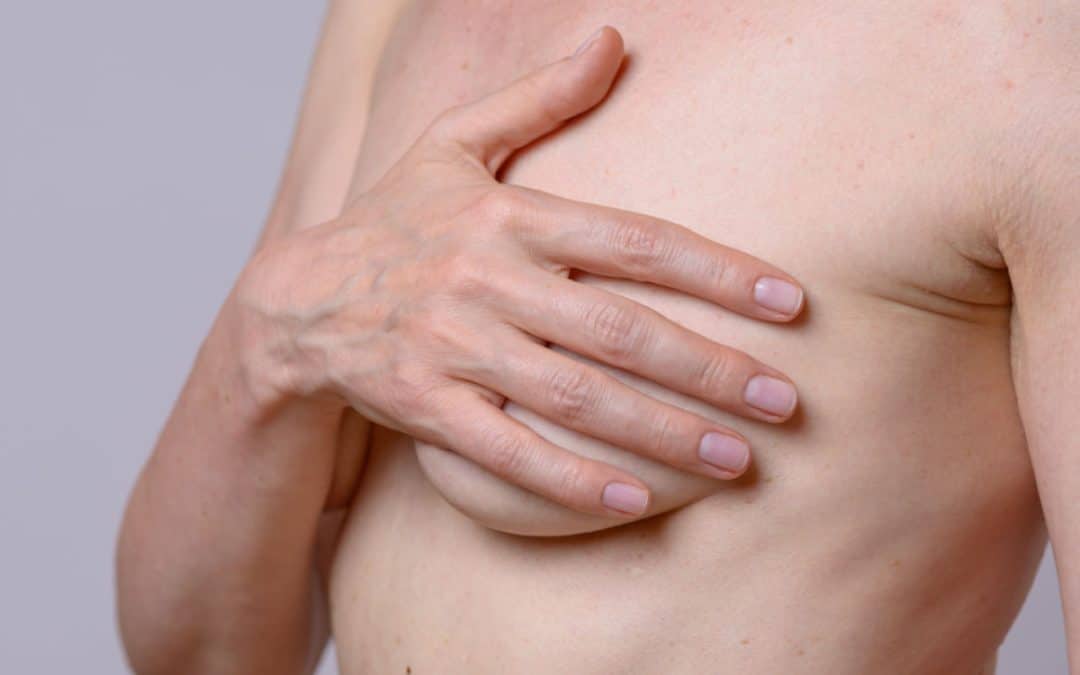
A breast self-examination involves inspecting your breasts by yourself and this helps you understand the normal look and feel of your breasts. To enhance your breast awareness, you use both visual and tactile methods, such as touching and feeling with your hands to check for any changes in the appearance or texture of your breasts.
Although most changes found during a self-exam are typically benign, some could indicate a serious condition, such as breast cancer.
While the breast self-exam technique is not always a reliable method for detecting breast cancer, many women report that they first discovered their breast cancer through a new lump they found themselves. Doctors recommend performing breast self-exam so you can become familiar with the normal consistency of your breasts.

Lumps or changes in your breasts are usually normal as these may be due to changes that occur at times in the menstrual cycle. The look and feel of your breasts will change as you age. The ideal time to perform a breast self-exam is usually the week after your period ends. Hormone levels vary throughout the menstrual cycle, leading to changes in breast tissue. If you menstruate, select a time in your cycle when your breasts are least tender. Swelling typically reduces when your period begins.
It is worth noting that during lactation, breasts can change in size and nipples. During lactation breast size usually increases two to three times in size. You can experience tenderness, swelling, and enlargement due to milk production or increased blood flow. The nipples may crack or become more sensitive. After breastfeeding the shape of your breast may change and not return to their pre-pregnancy appearance and some loss of breast volume is common after weaning.
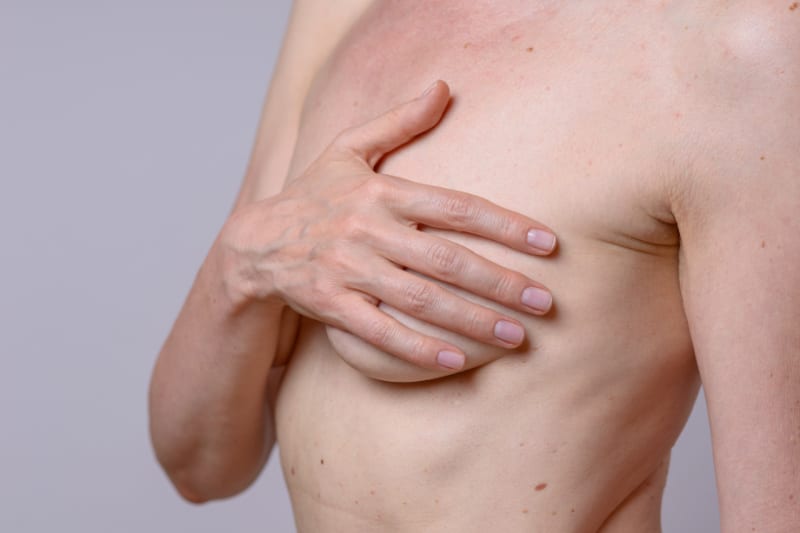
HOW TO CHECK YOUR BREAST
Practice TLC - Touch, Look, Check
TOUCH
Self-checking involves feeling for changes that deviate from what is normal for you. This might include a thickened area, lump, or anything that feels noticeably different from other areas in your breasts.
Manual examination
Using the pads of your fingers
Use the pads of your three middle fingers, rather than the tips to examine your breast. Use a circular motion to feel for any lumps or other changes in your armpits and breasts, covering from your collarbone to your abdomen and from your armpit to your cleavage. Squeeze the nipple gently to check for any discharge or lumps. If you find it difficult to feel with your finger pads, try using the backs of your or palm.
Using various pressure levels
Apply varying levels of pressure to examine different depths of breast tissue. Use light pressure to feel the tissue just beneath the skin, medium pressure for slightly deeper tissue, and firm pressure to reach the tissue closest to the ribs and chest. Ensure to apply each pressure level before moving to the next area. Consult your doctor or nurse for advice if you are unsure about how much pressure to apply.
Do not rush
Take your time to ensure you thoroughly examine your breasts for several minutes.
Follow a pattern
Use a methodical technique to ensure you examine your entire breast. Begin near your collarbone and examine that section, moving your fingers toward your nipple. Then move your fingers to the next section. To ensure all areas are covered, use a circular, up-and-down, or wedge pattern.

LOOK
Visual examination is a very important part of checking your breasts as some breast cancers are detected by visual signs such as skin changes, changes in shape, new nipple inversion, dimpling on the skin, or crusting on the nipple. Be aware of any discharge coming from the nipple without squeezing.
• Stand in front of a mirror with your arms at your sides, hands pressed on your hips and then raise your arms above your head with the palms of your hands pressed together and look for the same changes. Lift your breasts to check if the ridges along the bottom of your breasts are symmetrical.
• Check your breasts and nipples from different angles and with different arm positions for any changes in the colour, shape, size, or contour of each breast including any dimpling, puckering, or changes in the texture of the skin.
If you have a vision impairment that makes it difficult for you to visually inspect your breasts, ask a trusted friend or a family member to help you.
CHECK Positioning
You can examine yourself lying down or standing up in the shower regularly, preferably once a month, and at the same time as your menstrual cycle.
• Lying down. Lie on your back on a flat surface or a bed. This position helps breast tissue to spread out evenly, making it thinner and easier to feel any abnormalities.
• In the shower. Apply shower gel or soap to your fingers and breasts to allow your fingers to glide more smoothly over your skin.
If you have larger breasts, it may be easier to perform a self-exam while lying down, as this position flattens the breast tissue.
• Place a folded towel under one shoulder and raise your arm above your head.
• With your other hand, examine your entire breast, including the nipple, the area up to the collarbone, and under your arm. Then, switch the towel to your other shoulder and repeat the exam on the other side.
Breast Screening, Self-Checks and Private Breast Ultrasound: What Is the Difference?
It is easy to confuse breast self-checking, breast screening and breast ultrasound, but they are not the same thing.
Breast self-checking helps you understand what is normal for your own body. NHS guidance recommends checking your breasts or chest regularly, around once a month, so you are more likely to notice a change in size, shape, skin, nipple, breast tissue, chest wall or armpit.
NHS breast screening usually means a mammogram. A mammogram is an X-ray test used to look for cancers that may be too small to see or feel. In the NHS, breast screening is routinely offered to women from age 50 up to their 71st birthday, usually every three years.
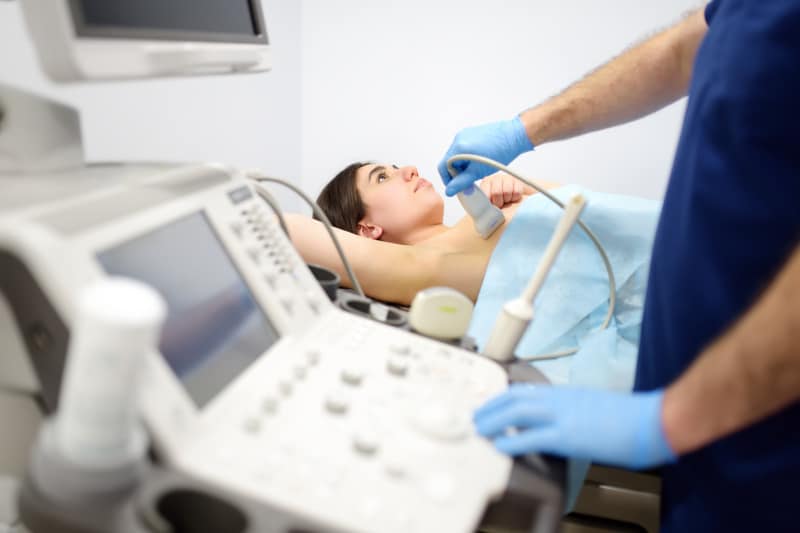
A private breast ultrasound is different. It is usually a targeted diagnostic scan, often used when you have a specific concern such as a lump, breast pain, swelling, nipple discharge, skin changes, an armpit lump, dense breast tissue, breast implant concerns, or a change found during a self-check. At Universal Ultrasound Diagnostics in Kings Norton, Birmingham, a breast ultrasound can assess the breast tissue, armpit/axilla where appropriate, cysts, lumps, masses, infections, and blood flow in the breast area.
When should you book a private breast ultrasound?
A private breast ultrasound may be helpful if you have noticed:
- a new lump in the breast, chest wall or armpit
- a thickened area that feels different from the surrounding breast tissue
- breast swelling, redness, heat or signs of infection
- nipple discharge, especially if it happens without squeezing
- a nipple that has newly turned inwards
- skin dimpling, puckering, crusting, sores, rash or texture change
- persistent breast or armpit pain that is not normal for you
- a change in breast shape or size
- concerns after surgery, implants, trauma or breastfeeding
NHS guidance advises seeing a GP if you have a lump or swelling in the breast, chest or armpit, any breast/chest/nipple change that is not normal for you, or breast/armpit pain that does not go away. A private ultrasound can give useful imaging information, but it should not replace GP or breast clinic assessment when symptoms are concerning.

How can an ultrasound scan help if you find a lump?
A private breast ultrasound scan is a useful examination that can aid in diagnosis. In breast health, it is particularly useful when a lump can be felt. The ultrasound can reveal the lump's composition, distinguishing between solid and cystic masses, and this information is crucial for further evaluation of any abnormalities.
A cyst is closer to the skin surface than lipomas. Most breast cysts do not require treatment unless they are large, painful, or uncomfortable. If needed, draining the fluid from the cyst can help relieve symptoms, or biopsy or fine-needle aspiration may be performed to confirm diagnosis.
Ultrasound helps to assess lymph nodes and identify infections or other abnormalities. Lymph nodes are small, round clusters of tissue commonly located in the armpits, neck, groin, and deeper within the abdomen and chest. Swelling of lymph nodes typically indicates that the body is combating a foreign invader, such as an infection or a buildup of abnormal cells. In most cases, swollen lymph nodes are a symptom of an infection. However, Swollen lymph nodes (lymphadenopathy) can be associated with breast cancer.
It can be scary to find a change in your breast that does not look or feel normal, but it is important to get any concerning signs checked out by your GP. If you have had a breast change checked by ultrasound and the results were normal but it continues to grow or change, it is important to go back and have it checked again or seek a second opinion.
When should you not wait for a routine private scan?
Please contact your GP promptly, NHS 111, or urgent care if you have a rapidly changing lump, significant redness or swelling, nipple changes with a new lump, bloody nipple discharge, a hard or fixed lump, or a breast/armpit lump with other symptoms that worry you.
NICE guidance recommends suspected cancer pathway referral for people aged 30 and over with an unexplained breast lump, with or without pain. It also recommends referral consideration for skin changes that suggest breast cancer, and for people aged 30 and over with an unexplained lump in the armpit.
If you have symptoms, do not wait for your next routine breast screening appointment. NHS guidance specifically advises seeing a GP if you are worried about breast cancer symptoms, even if you have recently had breast screening.
What can a breast ultrasound show?
A breast ultrasound uses sound waves, not radiation. It can help show:
- whether a lump appears fluid-filled, such as a cyst, or solid
- the size, shape and position of a lump or area of concern
- whether nearby breast tissue or the armpit lymph nodes need closer assessment
- signs that may fit with cysts, inflammation, infection, benign lumps or other abnormalities
- blood flow patterns where Doppler is used
During an ultrasound scan, the sonographer evaluates the size, shape and appearance of tissues, looks for abnormalities such as lumps or thickened areas, assesses whether a finding appears fluid-filled or solid, and checks blood flow where appropriate.
What ultrasound cannot do on its own
A breast ultrasound can provide important information, but it cannot diagnose everything on its own. Some ultrasound features may look reassuring, while others may need further assessment. A finding that looks uncertain or suspicious is not a diagnosis by itself, and many findings that need further checks are still benign.
If further tests are recommended, this may include GP review, a breast clinic referral, mammogram, MRI, blood tests, biopsy or follow-up imaging. This is a careful, precautionary approach to reach the clearest diagnosis. A normal ultrasound is generally reassuring, but no single scan can guarantee detection of all conditions, and symptoms that continue, grow or change should be reviewed again.
What happens at a private breast ultrasound appointment in Birmingham?
At Universal Ultrasound Diagnostics, breast ultrasound appointments may take up to 30–50 minutes, depending on the circumstances. The sonographer discusses immediate findings with you, and the report and images are emailed the same day.
Your report can be shared with your GP, breast clinic or specialist if further clinical correlation is needed.
You can find more useful information about breast self-examination from
Touch, Look, Check | Breast Cancer Now

What to do if you get diagnosed and who can support you
Finding out that you have cancer can be a huge shock. You may have lots of questions and not know who to talk to. If you have been diagnosed with cancer, different organisations can help with advice and support. Below are links to organisations that can help.
Just been diagnosed? | Macmillan Cancer Support
Private Breast Screening & Breast Ultrasound
Regular self-checks help you spot changes early. If you notice anything unusual or want expert reassurance, schedule an appointment with our friendly team.
For imaging-led peace of mind, explore our breast ultrasound service.
Ultrasound Diagnostics private ultrasound Clinic provides quick, easily accessible scans, frequently available the same day.
Contact Ultrasound Diagnostic, or use our Online Booking System to schedule an ultrasound scan appointment