


It is challenging to determine the precise moment of conception and implantation. The pregnancy gestation is determined from the initial day of the last menstrual period.
Healthcare professionals use the first day of the last menstrual period (LMP) as the starting point for estimating the gestation or dating the pregnancy. This method, known as gestational dating, is based on the assumption that ovulation and conception occur approximately two weeks after the start of the menstrual cycle. The gestational age is different from the fetal age which is the actual age of the developing baby from the time the baby was conceived.
Below is a brief explanation of why it is easier to use the LMP:
1. Last Menstrual Period (LMP):
• Ease to Remember: Most women can remember the date their last menstrual period began more easily than the date of conception.
• Standardisation: Using the LMP provides a standardised way to calculate gestational age, which is essential for consistent monitoring and management of pregnancy.
• Predictability: The average menstrual cycle is around 28 days, with ovulation typically occurring around day 14. Using the LMP gives a predictable framework for estimating the due date.
• Early Assessment: Early ultrasound measurements can confirm gestational age if there is uncertainty about the LMP date or if menstrual cycles are irregular. Combining these measurements with the LMP can provide a more accurate due date.
2. Ovulation and Conception:
In a typical 28-day menstrual cycle, ovulation usually occurs around 14 days after the first day of the LMP. Within 24 hours after ovulation, conception can occur when the egg is fertilised by sperm.

However, this differs if you have a shorter or longer cycle.
Shorter or Longer Cycles:
If a menstrual cycle is not the standard 28 days, the estimated due date (EDD) may be adjusted to reflect the length of the cycle. This adjustment ensures a more accurate estimation of the due date by considering the actual time of ovulation and conception.
Shorter Cycles:
A woman who has a shorter menstrual cycle (e.g., 25 days), is likely to ovulate earlier than day 14. Ovulation might occur around day 11 in such a cycle.
To adjust the due date, you would subtract the difference between the actual cycle length and the average cycle length from the standard calculation For instance 28 – 25 days. The difference is 3 days; therefore, the due date would be moved up by 3 days.
Longer Cycles:
A woman is likely to ovulate later than day 14 of the cycle if she has a longer menstrual cycle (e.g., 35 days). Ovulation might occur around day 21.
To adjust the due date, you would add the difference between the actual cycle length and the average cycle length to the standard calculation. In this case, the difference is 7 days (35 – 28 days). Therefore, the due date would be pushed back by 7 days.

Example Calculation:
Standard Calculation (28-day Cycle):
Last Menstrual Period (LMP): January 1
Estimated Due Date (EDD) using the standard Naegele's rule: October 8
(LMP + 280 days)
Adjusted Calculation for a 25-day Cycle:
Difference: 3 days earlier
Adjusted EDD: October 5 (October 8 - 3 days)
Adjusted Calculation for a 35-day Cycle:
Difference: 7 days later
Adjusted EDD: October 15 (October 8 + 7 days)
By adjusting the estimated due date according to the actual menstrual cycle length, the prediction becomes more accurate, reflecting the true timing of ovulation and conception.
3. Implantation:
About 6-10 days after conception, a zygote which is the fertilised egg travels down the fallopian tube and implants into the lining of the uterus
4. Gestational Age:
Although conception usually occurs about two weeks after the LMP, pregnancy is typically counted in weeks from the first day of the LMP. This approach provides consistency in managing and monitoring the pregnancy.
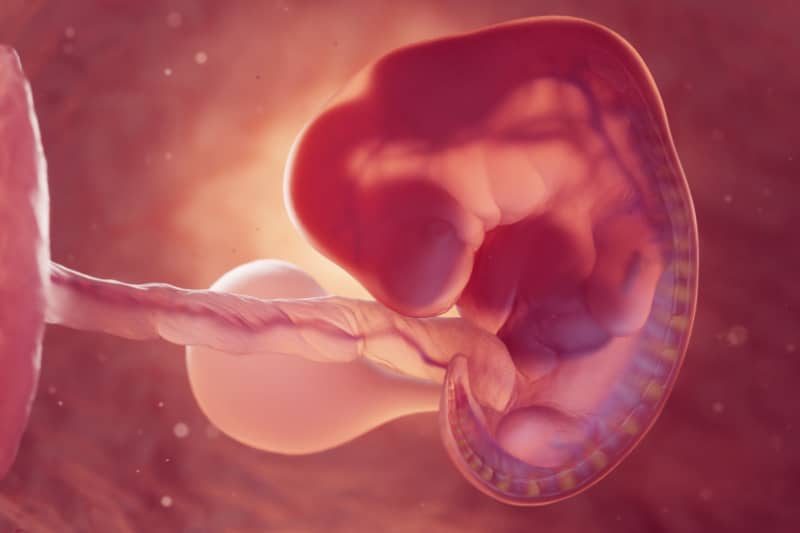
The LMP-based dating approach is widely accepted and is a practical standard for estimating how far along a pregnancy is, in light of the uncertainty surrounding the exact timing of conception and implantation.
However, there are some limitations to using the LMP for dating a pregnancy:
• Irregular Cycles: Women with irregular menstrual cycles may find it difficult to date their pregnancy using the LMP accurately.
• Ovulation Variability: Ovulation may not occur exactly 14 days after the start of the menstrual cycle for all women, leading to possible inaccuracies.
• Memory Recall: Some women may not accurately remember the date of their last menstrual period.
When the LMP is uncertain or menstrual cycles are irregular, an early ultrasound or fertility scan can provide a more accurate estimation of gestational age. Combining the LMP with ultrasound findings allows healthcare providers to manage the pregnancy more effectively.
LMP Pregnancy Timeline & Early Dating Ultrasound
Understanding your last menstrual period (LMP) helps map your pregnancy week by week. Pair it with a precise early dating scan for extra reassurance. If you’d like personalised guidance, Book an appointment with our specialist sonographers.
Ultrasound Diagnostics private ultrasound Clinic provides quick, easily accessible scans, frequently available the same day.
You can also learn more about our early pregnancy (dating) ultrasound service.
Contact Ultrasound Diagnostic, or use our Online Booking System to schedule an ultrasound scan appointment