


First Published: 24/06/2024
Updated: 06/07/2026
Estimated Reading Time: 9 mins 09 secs
INTRODUCTION OF HUMAN TESTES:
This article will explain what testes are, walk you through the function of the testes, early signs of testicular disease, and how to examine your testicles.
The testes, often known as testicles, combine organs that produce sperm cells (male gametes) and synthesise testosterone, the principal male sex hormone. These functions are essential for male fertility, sexual development, and the preservation of secondary sexual traits. The scrotum, a sac-like structure made of skin and muscle, encloses the testes. The scrotum protects the testes and regulates their temperature, which is necessary for proper sperm production. The scrotum’s position outside the body cavity allows it to maintain a slightly lower temperature than the body’s core temperature, which is critical for sperm survival.
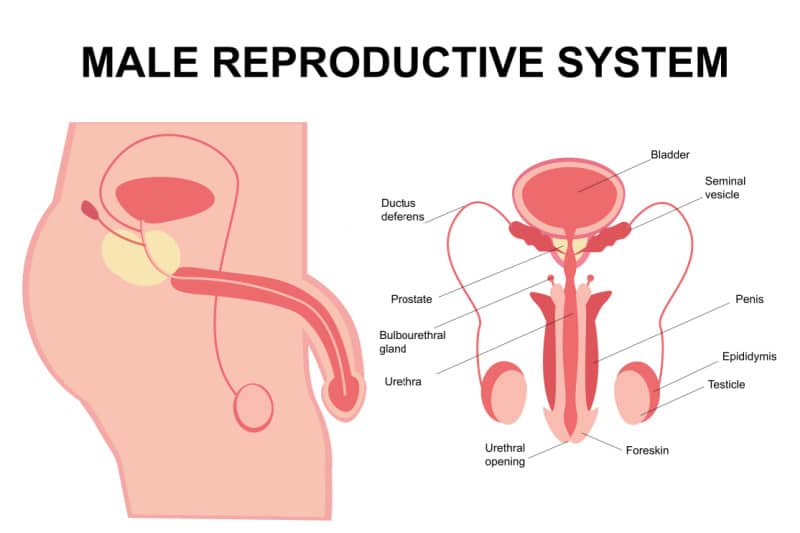
What are the functions of the testes:
The testicles are male reproductive organs that perform important roles in both the reproductive and endocrine systems. Their main functions include
Sperm production (spermatogenesis):
The testes generate spermatozoa, or sperm cells, which are required for male fertility. This happens in the seminiferous tubules of the testes.
Hormone Production:
The testes generate and secrete testosterone, the principal male sexual hormone. Testosterone is responsible for the development of male secondary sexual traits such as muscle and bone mass gain, voice deepening, and body hair growth. It also helps to sustain libido, regulate mood, and increase overall energy.

EARLY SIGNS OF TESTICULAR DISEASE:
Early identification of testicular illnesses can lead to better treatment outcomes. Common early symptoms of testicular disorders include
Lumps or Swelling:
The presence of a lump or swelling in one or both testicles is frequently the first indication of testicular cancer or other disorders such as cysts or hydroceles.
Pain or Discomfort:
Chronic pain or discomfort in the testicles, scrotum, or groin may indicate orchitis, epididymitis, or testicular torsion.
Changes in Size or Shape.-:
Noticeable changes in the size, shape, or consistency of the testicles can be indicators of a variety of testicular disorders.
Heavy Feeling in the Scrotum:
A sensation of heaviness or fullness in the scrotum may indicate a hydrocele or varicocele.
Sudden Fluid collection:
The fast accumulation of fluid in the scrotum may indicate an injury, infection, or other underlying disorders.
Whilst testicular cancer is uncommon, it affects approximately 1 out of every 250 males in their lifetime. It is the most frequent malignancy among young males aged 15 to 49 and it has a 5-year survival rate if identified early.
GUIDE TO TESTICULAR SELF-EXAM
Being proactive through testicular self-examination can save your life. Self-examinations can help detect any unexpected changes early on and are critical for early detection of testicular cancer, which greatly increases the likelihood of effective treatment.
Why is it important to perform a self-examination
Testicular self-examinations are crucial for detecting any changes in your testicles. Performing these exams monthly helps you become familiar with your testicles, making it easier to identify any abnormalities. Most cases of testicular cancer are discovered by the individuals themselves or their partners, with only a few detected by doctors. This highlights the importance of knowing what is normal for you and consulting a doctor immediately if any changes are noticed
How to conduct a testicular self-examination Timing:
The best time to perform a testicular self-exam is during or immediately after a warm shower or bath. The heat relaxes the scrotum, making the exam easier. It is normal for one testicle to be slightly larger or to hang lower than the other, so don't be alarmed. Be aware that each testicle has a small, coiled tube called the epididymis, which can feel like a small bump on the upper or middle outer side. Testicles also contain blood vessels, supporting tissues, and tubes that carry sperm, which some men might mistake for abnormal lumps. If you have any concerns, consult your doctor.
Position:
Stand in front of a mirror check for edema on the scrotal skin use both hands to examine each testicle separately. Place the index and middle fingers behind the testicle, and the thumbs on top. Feel for lumps gently roll the testicle between your thumbs and fingers. Feel for lumps or abnormalities. Locate the epididymis, which is a soft, rope-like structure on the back of the testicle. This is a normal feature of the anatomy, not a bump.
Differentiate between fluid-filled cysts
Differentiate between fluid-filled cysts and solid masses, and determine the size, location, and features of a lump. Assessing blood flow to the testicles can aid in the diagnosis of infections or torsion.

THE IMPORTANCE OF PRIVATE TESTICULAR ULTRASOUND SCANNING:
Private testicular ultrasound screening is an important diagnostic technique for determining testicular health and detecting potential problems. The significance of private ultrasound scanning includes
Early Detection and Diagnosis: Ultrasound scans can discover abnormalities in the testicles early on, allowing for fast diagnosis and treatment. Ultrasound is a non-invasive, painless method that uses high-frequency sound waves to provide comprehensive images of the testicles and their surroundings.
Real-time Imaging: It offers real-time imaging, which allows for instantaneous assessment of blood flow, tissue structure, and the presence of masses or fluid accumulation.
Guided procedures: Ultrasound scans can help guide procedures like biopsies and aspirations, assuring precision and lowering the risk of complications.
Monitoring and Follow-Up: Regular ultrasound scans help track the progress of testicular treatment, track changes over time, and ensure that disease does not reoccur.
Accessibility and Convenience: Private scan clinics typically provide faster access to diagnostic services than public healthcare facilities, minimising waiting periods and allowing for timely medical action. At Universal Ultrasound Diagnostics we offer same-day private testicular scan results.
For further information visit:
Symptoms of testicular cancer - NHS (www.nhs.uk)
Testicular exam - Mayo Clinic · How to do a Testicular Self Exam
When Should You Book a Private Testicular Ultrasound in Birmingham?
Checking your testicles regularly is a simple way to understand what is normal for you. NHS guidance recommends checking around once a month from puberty onwards. The best time is during or just after a warm bath or shower, when the scrotal skin is relaxed. Gently roll one testicle at a time between your fingers and thumb, and also feel behind each testicle where the epididymis sits.
When checking, look and feel for:
- a new lump or swelling
- one testicle becoming larger, heavier, firmer, or harder
- a change in size, shape, weight, or texture
- a new ache, discomfort, or pain in the testicle, scrotum, or groin
- swelling, tenderness, or a new lump around the epididymis, the soft tube behind the testicle
Most testicular changes are not cancer, but they should still be checked. NHS guidance advises seeing a GP if you notice a lump, swelling, pain, heaviness, firmness, a testicle getting bigger, or any change that is not normal for you. Finding a problem early can make it easier to treat.
Why you should not ignore a new lump or swelling
Testicular cancer is uncommon, but it is still important to act promptly if something changes. Cancer Research UK reports around 2,300 new testicular cancer cases per year in the UK, and around 96.5% of men diagnosed with testicular cancer survive for 10 years or more. That is why awareness, self-checking, and timely assessment matter.
A lump or swelling can also be caused by non-cancerous conditions such as an epididymal cyst, hydrocele, varicocele, infection, inflammation, trauma, or other scrotal changes. A physical self-check can help you notice that something has changed, but it cannot reliably tell you what the change is. This is where a scrotal or testicular ultrasound can help.
How a testicular ultrasound can help
A testicular ultrasound, is sometimes referred to as a scrotal ultrasound, whilst they are closely related, they are not the same. However, both examinations use sound waves which is non-invasive and safe and is used in assessing the epididymis, testicles, and surrounding scrotal structures.
Scrotal ultrasound is the wider term often used which refers to an ultrasound examination of the whole scrotum area, including:
- The epididymides
- Both testicles (testes)
- The scrotal wall
- The spermatic cords (within the scrotum and up to the superficial inguinal region where appropriate or as needed)
- Assessment of blood flow using Doppler imaging (colour and spectral Doppler)
The groin (inguinal region) can be scanned if clinically indicated, as it is not routinely included in a standard scrotal ultrasound scan. The inguinal must be examined if there is a relevant clinical indication, such as:
- Undescended testis
- Suspected inguinal hernia
- Pain which extends into the inguinal canal
- A palpable groin lump
- Evaluation of the spermatic cord, which includes extending into the inguinal canal
Testicular ultrasound particularly refers to the imaging of the testes. However, in medical or clinical practice, a testicular ultrasound is often used interchangeably with a scrotal ultrasound because an examination of the testicles usually includes evaluation of the surrounding scrotal structures.
A testicular or scrotal ultrasound scan can help show whether a lump or swelling appears fluid-filled or solid, where it is located, and whether there are blood-flow changes when Doppler is used.
A private scrotal/testicular ultrasound may be helpful if you have:
- a new testicular lump
- scrotal swelling or heaviness
- persistent testicular, scrotal, or groin discomfort
- a suspected epididymal cyst, hydrocele, or varicocele
- pain or swelling after injury or trauma
- concerns about inflammation or infection
- fertility-related concerns where a varicocele may be relevant
- ongoing symptoms and you want a report to share with your GP or specialist
At Universal Ultrasound Diagnostics in Kings Norton, Birmingham, a scrotal/testicular scan can assess causes of scrotal mass, swelling, pain, trauma-related symptoms, varicocele, hydrocele, epididymal cysts, inflammation, infection, and other scrotal abnormalities. The clinic’s service page states that findings are discussed where appropriate and reports/images are emailed the same day.

When not to wait for a private scan
Do not wait for a routine private ultrasound appointment if you have sudden, severe testicular pain, rapidly increasing swelling, pain with nausea or vomiting, or a testicle that appears to sit higher than usual. These symptoms can be linked with testicular torsion, where the blood supply to the testicle may be affected. This needs urgent hospital assessment.
If you experience sudden or severe pain in the scrotal region, or you start feeling unwell, you must seek urgent medical help by calling NHS 999, 111 or going to the Accident and Emergency (A & E) depending on the severity of your symptoms.
What ultrasound can and cannot tell you
An ultrasound can provide real-time, detailed information regarding the area being scanned. For example, if it is a lump, the scan can show the size, characteristics, location, and blood-flow pattern at that moment in time. This will help to determine whether the lump is benign or malignant, which will help decide whether further tests may be required.
An ultrasound alone cannot diagnose cancer or rule out every condition. It is part of the diagnostic process, and some findings may require clinical correlation. Depending on the clinical indication, further testing, imaging, or specialist assessment may be required to reach a definitive diagnosis.
If a lump looks indeterminate or suspicious, or if symptoms continue despite a reassuring scan, you may still need GP review, blood tests, urology referral, MRI/CT, biopsy, or other investigations. Universal Ultrasound Diagnostics already states on its scrotal/testicular scan page and in the patient appointment email confirmation that ultrasound alone cannot diagnose some conditions, illnesses, diseases, or cancer and should be used alongside other diagnostic tests and clinical correlation.
As diagnostic sonographers, we do not provide medical advice. Universal Ultrasound Diagnostics therefore advises patients to share their ultrasound report with their GP or specialist, who can interpret the findings alongside their symptoms, medical history, and physical examination and may recommend further investigations to reach a definitive diagnosis.
Our sonographers explain the findings of the ultrasound scan and make recommendations where appropriate within the scope of their professional practice. For in-depth information regarding understanding findings and what they may mean, please visit our website https://ultrasound.stagingwebsite.uk/health-blog/.
What happens at your appointment
A private testicular ultrasound is usually straightforward. You will be asked about your symptoms, the area of concern, and how long the problem has been present. If you have had scrotal implants, let the sonographer know. Whilst implants are easy to identify on an ultrasound, informing the sonographer before performing the scan is useful as it provides crucial clinical context that can influence how the examination is performed and interpreted.
The scan is performed with gel and an ultrasound probe over the scrotal area. Doppler may be used to assess blood flow where appropriate. RadiologyInfo notes that scrotal ultrasound is usually completed within around 15–30 minutes, while Universal Ultrasound Diagnostics lists a scan time of 30–50 minutes for its scrotal/testicular scan service.
After the scan, you will receive a report and images that can be shared with your GP or specialist. If the findings need further assessment, this should be followed up promptly.