

Which scan do I need: A Unilateral or Bilateral Knee Ultrasound?
Often, when patients are experiencing knee problems, they are told they might need a knee soft tissue ultrasound. One of the first questions patients ask us is whether to have a scan for one knee (unilateral) or both knees (bilateral).
Here at Universal Ultrasound Diagnostics, we help patients make an informed decision by taking their medical and family history, symptoms and previous tests. Patients we speak to usually share their symptoms, such as which knee, how long, what makes it worse, any swelling or lump, and we advise them whether unilateral or bilateral is the more sensible starting point.
Whilst this might feel like small details, it matters because it affects what the sonographer takes into account and can compare, what can be assessed on the day, and whether you leave with answers.
This guide will help you choose the right option based on your symptoms, without overcomplicating it.

What do “unilateral” and “bilateral” mean?
- A unilateral knee ultrasound involves scanning only one knee, usually the side that is painful, swollen, or has a lump.
- A bilateral knee ultrasound involves scanning both knees during the same appointment if you are experiencing similar or different symptoms, or for your peace of mind
The scan itself is the same type of test. The difference is simply how much is assessed.
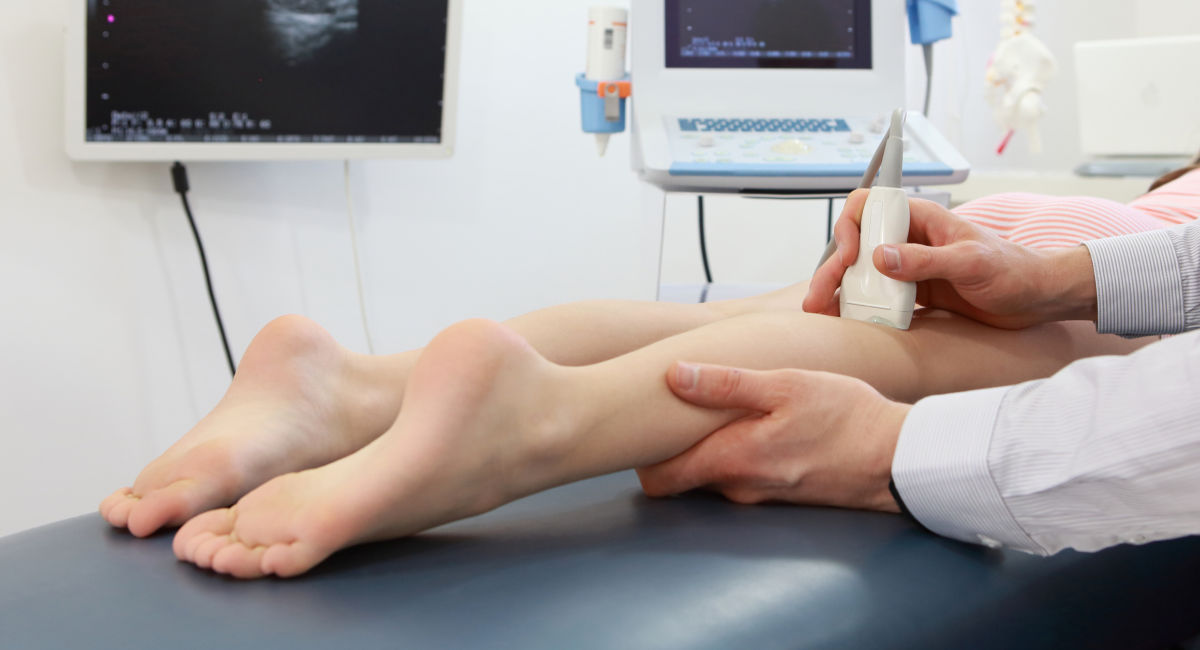
What can a knee soft tissue ultrasound actually look at?
In our clinic, the sonographer explains the examination to ensure the patient understands before scanning. However, usually patients ask us more questions, for example, what the knee ultrasound would look at.
A knee ultrasound scan is very good for superficial structures and for assessing some tissues in real time.
It is commonly used to look at:
- Tendons (for example patellar tendon or the quadriceps tendon)
- Collateral ligaments (on the inner and outer side of the knee)
- Bursae (small fluid sacs that can become inflamed)
- Fluid in and around the knee joint
- Cysts, including a Baker’s cyst behind the knee
- Some muscle and soft tissue problems around the knee
It is also a useful way to check blood flow using Doppler, and it can support guided knee injections. Colour Doppler is an add-on utilised during a knee ultrasound when we want to know what's going on inside a structure rather than just how it looks. The sonographer can evaluate blood flow inside and around tendons, cysts, and other soft tissue diseases using Doppler. It is frequently used when a tendon injury or rupture is suspected. Increased blood flow may be a sign of active inflammation or healing, whereas a rip may be supported by an absence of expected flow. Doppler aids in confirming that an area is actually cystic and not a blood artery or vascular mass in situations like a Baker's cyst or other fluid collections. In general, colour Doppler provides crucial functional information that aids in differentiating between traumatic and inflammatory conditions.

When a unilateral knee ultrasound is usually enough
We find in our clinic that a unilateral scan is often the right choice when your symptoms are clearly on one side, and you want answers for that specific knee.
It tends to fit best if:
- The pain, swelling, or clicking is only on one side
- You have a new lump or visible swelling around one knee
- You have had a recent twist, knock, or strain affecting one knee
- The goal is to assess a specific area (for example, front of knee tendon pain, inner knee pain, or a lump behind the knee)
In plain terms, if your problem is one knee, scanning one knee is often appropriate.

When a bilateral knee ultrasound can be a better option
A bilateral scan is most useful when comparison is likely to add value, or when symptoms are not truly “one-sided” once you step back and look at the bigger picture.
You might want to consider bilateral if:
Your symptoms affect both knees
Even if one knee is worse, many people have pain or stiffness in both knees, especially if the issue has been building for months.
You have a long-standing problem and want a baseline
For chronic tendon issues or recurring swelling, scanning both sides can help show whether changes are present on one side only or whether there is a similar pattern developing on the other knee, too.
You are compensating
If you have been limping or protecting one side, it is common to overload the other knee. Scanning both can be helpful when the “good knee” has started to complain.
You are not sure which knee is the main source
Sometimes pain feels like it is “in the knee” but is actually coming from neighbouring structures. A bilateral scan can help avoid missing a second issue, especially when symptoms are vague or shifting.
You have a visible difference and want a like-for-like comparison
If one knee looks more swollen, lumps, or feels thicker around a tendon, comparing with the other side can make the assessment clearer.

A simple way to decide
If you are stuck, this checklist usually gets you to the right answer:
Choose unilateral if:
- Symptoms are clearly in one knee
- The problem is new, localised, and you can point to it
- You mainly want reassurance about one specific concern
Choose bilateral if:
- Symptoms affect both knees, even mildly
- The issue is recurring or long-standing
- You suspect compensation or overuse on the other side
- You want a clearer comparison for peace of mind
If you are booking privately, it is also worth thinking about the practical side. If you book unilateral and later realise the other knee needs checking too, that can mean a second appointment.
What ultrasound can’t do, and when another test might be better
Ultrasound is excellent for many soft tissue problems, but it is not the best test for everything inside the knee.
For example, deeper structures like menisci and some internal ligament injuries often need different imaging, such as MRI, depending on your symptoms and clinical assessment.
At our clinic, we clearly explain to our patients what an ultrasound can and cannot reveal, as well as what the next step should be if the scan is normal but your symptoms continue.
Do not wait if you have “red flag” symptoms
Most knee problems are not emergencies, but some symptoms should be assessed urgently.
Get urgent advice if you have:
- A very painful knee, and you cannot put any weight through it
- A knee that is hot, red, very swollen, or if you have a fever or feel unwell
- A knee that looks deformed after an injury
- Sudden severe swelling after a pop or injury
If any of those apply, it is better to seek urgent clinical assessment rather than booking routine imaging.
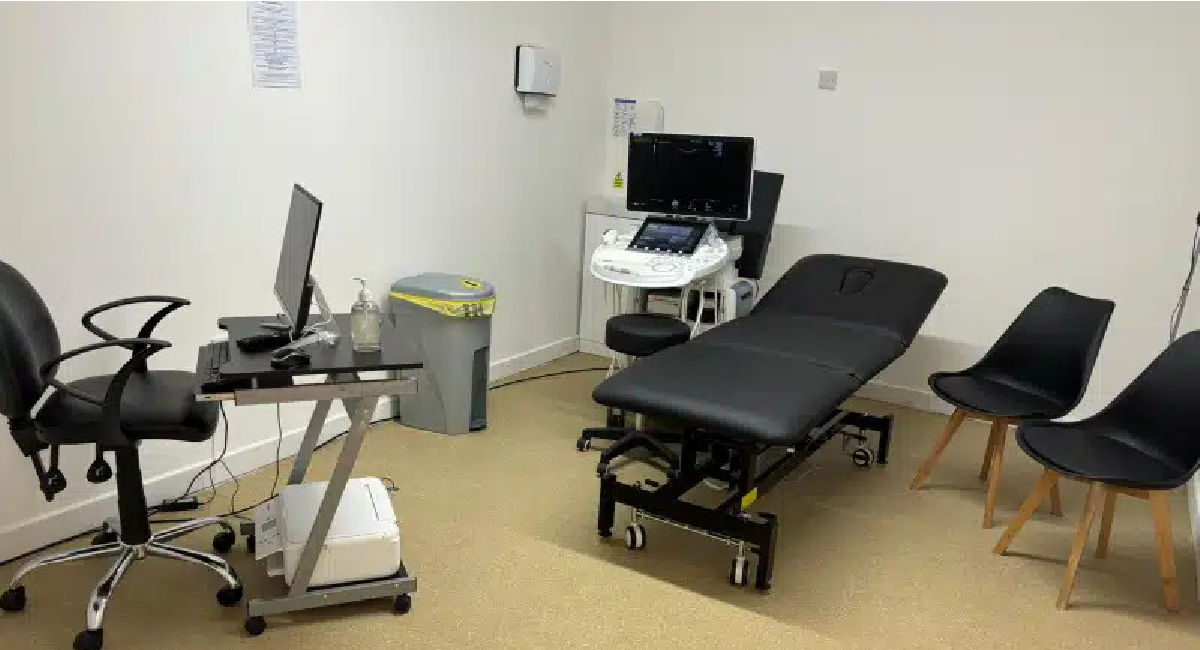
What to expect at your appointment
A knee soft tissue ultrasound is typically straightforward:
- Gel is placed on the skin, and a probe is gently moved over the painful area. If at any point during scanning you feel too much pain, let our sonographers know
- You may be asked to bend or straighten the knee so the sonographer can assess tissues during movement
- The scan is non-invasive and does not use radiation
To get the best from the appointment, it helps to arrive knowing:
- Which movements trigger the pain
- Where swelling or lumps appear
- How long have symptoms been present
- Any past injuries or surgeries
Next steps after the scan
What happens next depends on what the scan shows.
Sometimes the result is reassuring and points towards a simple soft tissue cause. Other times, it identifies a clear issue such as a tendon problem, fluid collection, or cyst that explains the symptoms.
If your scan is normal but the knee continues to worsen, changes shape, or you develop new symptoms, it is worth speaking to your GP again. Persistent change deserves a second look.
Why choose a private ultrasound scan
Choosing the right private healthcare clinic is all about access, reassurance, and discretion. Our Birmingham private ultrasound clinic is easy to reach, with quick, flexible appointments and a welcoming team dedicated to your comfort. We are a highly rated and trusted Private Ultrasound Clinic. Read our client reviews.
Take the next step today:
- Book your scan online
- Request a call back to discuss the best scan for you
- Message us with any concerns; no question is too small
Contact Ultrasound Diagnostic, Birmingham’s accessible, confidential choice for knee ultrasound scans. Use our Online Booking System to schedule an ultrasound scan appointment and feel confident about your health.