

At Universal Ultrasound Diagnostics, our mission is not just to provide the best diagnostic Ultrasound scans in the UK, but also to empower you to prevent the need for such scans. This health article will delve into what a stroke is, its causes, and how you can significantly reduce the risk of strokes through lifestyle changes.
These changes, including dietary adjustments and evidence-based preventive measures, can be implemented by you. We will discuss key points such as symptoms and types of strokes, risk factors, prevention strategies, actions to take during a stroke, the impact and prevalence of stroke, and the importance of screening.
Our aim is to provide you with a comprehensive understanding of each of the key points mentioned above. We want to equip you with practical tips and advice that you can easily incorporate into your daily life to reduce your risk of experiencing a stroke. Remember, prevention is always better than cure.
By making these lifestyle changes and ensuring regular medical check-ups and screenings, you can effectively manage and reduce your risk factors. We are here to guide you on this journey towards a healthier, stroke-free life.
What is a Stroke?
A stroke is when the blood flow to the brain is either blocked or significantly reduced. This disruption deprives brain tissue of essential nutrients and oxygen, potentially leading to the damage or death of brain cells. This cell damage can impact bodily functions, as well as emotional and cognitive states. Strokes can be life-threatening and require urgent medical attention. If untreated, it can result in , incapacity, brain damage, and even death, making it a critical health concern.

Common Symptoms of a Stroke include:
Difficulty in speaking includes slurred words or trouble pronouncing words clearly.
- Swallowing difficulties.
- Numbness or paralysis, particularly on one side of the face, arm, or leg.
- Trouble walking or impaired coordination.
- Confusion or difficulty understanding speech.
- Vision difficulties in one or both eyes.
- Sudden, severe headache, which may sometimes be accompanied by vomiting.
- Metallic taste in the mouth.
What are the main types of strokes?
There are two main types of strokes: Ischemic and Hemorrhagic. Knowing the difference is important so that measures can be taken to reduce your risk of both.
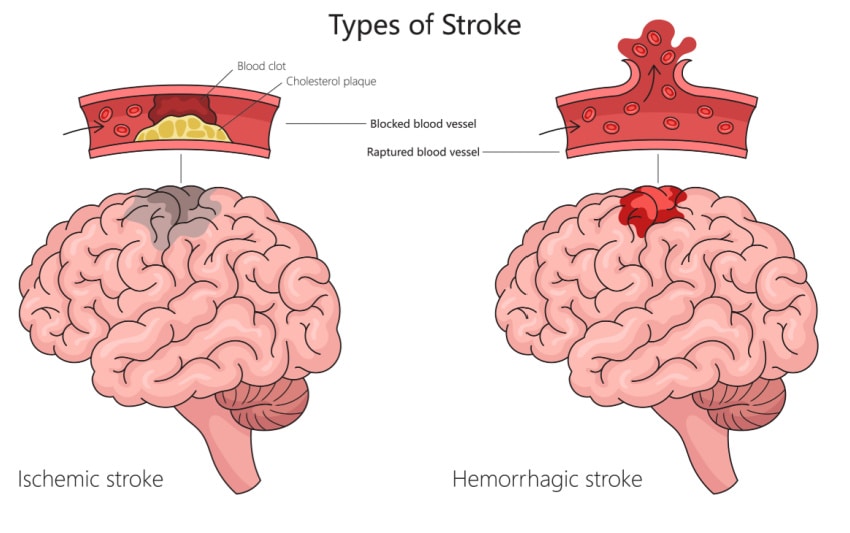
Ischemic Stroke: This type of stroke happens when a clot or other blockage obstructs a blood vessel supplying the brain. It is the most prevalent type of stroke and accounts for about 85% of all stroke cases in the UK, according to the Stroke Association.
Causes of an Ischaemic Stroke
Various factors can lead to the blockages that cause ischaemic strokes, and these include:
Atherosclerosis (Narrowed Arteries)
Atherosclerosis is the buildup of fatty deposits (plaques or atheromas) inside the arteries. These deposits can stiffen and narrow arteries, particularly in the neck, reducing blood flow to the brain. If a plaque breaks down or becomes inflamed, a clot may form, potentially blocking the artery and causing a stroke.
Factors contributing to atherosclerosis:
- Lifestyle factors such as obesity and smoking
- Medical conditions such as high cholesterol, high blood pressure and diabetes.
Small Vessel Disease
This condition involves damage to the tiny blood vessels deep within the brain, leading to reduced blood flow and an increased stroke risk. It can cause multiple small strokes and increases the risk of brain haemorrhages. Small vessel disease is linked to dementia and cognitive decline.
Causes of small vessel disease:
- High blood pressure
Heart Conditions
- Patent Foramen Ovale (PFO): A PFO is an opening between the heart's right and left sides that naturally closes after birth. However, it may remain open in about one in four people, posing a stroke risk if a blood clot forms and travels to the brain. PFO might require surgery or treatment such as blood thinners to close the gap.
- Atrial Fibrillation (AF): AF can be asymptomatic but may also cause palpitations. This irregular and sometimes rapid heart rhythm can lead to blood clots forming in the heart, which might travel to the brain and cause a stroke.
- Other Heart Issues: Conditions such as mechanical heart valves or a recent heart attack can also elevate stroke risk.
Arterial Dissection
This occurs when an artery’s lining tears, possibly due to injury or spontaneously. Blood pooling at the tear site can form a clot, restricting blood flow to the brain or moving to the brain, potentially causing a stroke.
Other Causes
Strokes can also be linked to heart infections and inherited blood clotting disorders.

HAEMORRHAGIC STROKE:
This type of stroke accounts for 15 %, according to the Stroke Association, and happens when a blood vessel in the brain bursts, leading to bleeding within the brain. Although less common than ischemic strokes, haemorrhagic strokes tend to be more severe.
CAUSES OF HAEMORRHAGIC STROKE
Haemorrhagic strokes can result from various factors, including high blood pressure, abnormal blood vessels in the brain, and a build-up of fatty deposits in the arteries.
There are two primary types of haemorrhagic stroke: Intracerebral Haemorrhage (ICH) and Subarachnoid Haemorrhage (SAH).
These are further explained below.
INTRACEREBRAL HAEMORRHAGE (ICH):
ICH involves blood leaking from a blood vessel into brain tissue, often deep within the brain. It is the most common type of haemorrhagic stroke, comprising about two-thirds of cases.
CAUSES OF ICH
Cerebral Small Vessel Disease: Damage to the brain's small blood vessels can lead to bleeding within the brain tissue. There are two main forms:
- Small Vessel Disease from High Blood Pressure: Chronic high blood pressure can damage and stiffen the brain's blood vessels, causing blockages and small areas of damage that appear as tiny scars on brain scans. This reduces blood flow to brain cells, affecting cognitive functions and increasing the risk of haemorrhagic stroke.
- Cerebral Amyloid Angiopathy (CAA): It is common in people with dementia, although it can also occur without dementia. CAA involves the build-up of amyloid beta protein in the small blood vessels near the brain's surface, making them prone to bleeding. While there is no direct treatment for CAA, managing blood pressure can help reduce the risk of brain bleeds.
Abnormal Blood Vessels: Rare vascular malformations can cause ICH. These include:
- Arteriovenous Malformation (AVM): Tangling blood vessels can disrupt normal blood flow, leading to high-pressure blood in weak vessels that may bleed.
- Cavernous Malformation (Cavernoma): Enlarged blood vessels may not cause symptoms but can be prone to bleeding due to weak vessel walls.
SUBARACHNOID HAEMORRHAGE (SAH)
SAH involves bleeding into the space between the brain and its protective membranes, known as the subarachnoid space, which contains cerebrospinal fluid that cushions the brain.
CAUSES OF SAH
SAH is often caused by a ruptured aneurysm, a ballooned-out blood vessel with weak walls that can burst and lead to bleeding into the fluid surrounding the brain. This type of bleeding is less common, accounting for about one-third of haemorrhagic strokes and about one in twenty of all strokes.

RISK FACTORS OF STROKE
The most common risk factors for stroke encompass genetic factors and a range of lifestyles:
- Smoking: Significantly increases the risk of stroke
- Age: The risk increases with age.
- Diabetes: Can damage blood vessels over time, increasing stroke risk.
- Obesity: Associated with other risk factors such as diabetes and hypertension.
- Gender: Though women are more likely to die from stroke, men have a higher risk of stroke than women.
- High blood pressure: The most significant risk factor for stroke.
- Family history of stroke: Genetic predisposition plays a role.
PREVENTION STRATEGIES
Prevention strategies include:
- Maintaining a healthy lifestyle: Engaging in regular physical activity, eating and maintaining a healthy balanced diet that is low in salt and fats that are saturated and limiting alcohol intake.
- Controlling blood pressure: Controlling/managing underlying medical issues such as regular monitoring and management.
- Quitting/giving up smoking: Reduces stroke risk significantly.
- Managing diabetes and high cholesterol: Keeping blood sugar levels controlled and lowering cholesterol.
- Regular medical check-ups: Early detection and management of risk factors and being aware of the symptoms of a stroke so that treatment may begin as soon as possible.

Action to take if someone is having a stroke
If you suspect someone is having a stroke, remember to act F.A.S.T.:
- Face: Ask the person to smile. Check if one side of the face droops.
- Arms: Ask the person to raise both arms and check if one arm drifts downward.
- Speech: Ask the person to repeat a simple phrase and check if their speech is slurred or appears strange.
- Time: Call emergency services immediately if you observe any of these signs. The faster the treatment, the better the chances of minimising brain damage and improving outcomes.
Strokes rank among the world’s top causes of death and disability. The World Health Organisation (WHO) estimates that strokes cause around 6.2 million deaths annually and are the main cause of permanent disability. We hope this article has been insightful and informative.
Reduce Your Stroke Risk with a Carotid Ultrasound
Taking control of your cardiovascular health by managing blood pressure, staying active, and not smoking can significantly lower your stroke risk.
Ultrasound Diagnostics private ultrasound Clinic provides quick, easily accessible scans, frequently available the same day.
You can also learn how our carotid ultrasound assesses blood flow in the neck arteries to help identify risks early
Contact Ultrasound Diagnostic, or use our Online Booking System to schedule an ultrasound scan appointment