
Deep Vein Thrombosis Scan Stratford Upon Avon
Private Deep Vein Thrombosis (DVT) Scans at our Clinic near Stratford Upon Avon
Deep Vein Thrombosis Scan Stratford Upon Avon
Universal Ultrasound Diagnostics offers private Deep Vein Thrombosis (DVT) ultrasound scans near Stratford Upon Avon. We use the latest Ultrasound systems to deliver excellent imaging confidently for both our private clients and referring practitioners. Our latest machines coupled with highly skilled staff deliver the highest quality performance.
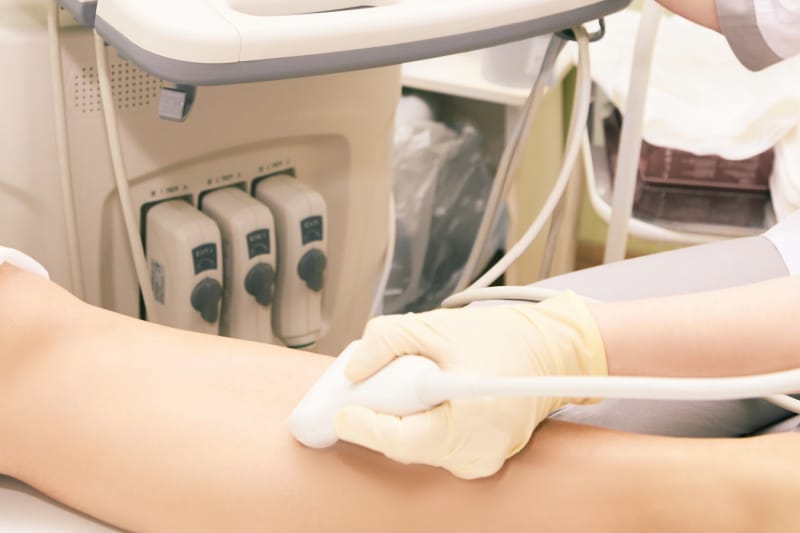
Deep Vein Thrombosis (DVT) Ultrasound Scan
Deep vein thrombosis (DVT) scan: This is an examination that utilises high-frequency soundwaves to check for blood clots in the leg veins. DVT symptoms include swelling in one or both legs, cramping or throbbing pain in the thigh or calf, chest pain, breathlessness and warm or darkened skin around the painful area. The scan may take up to 30 minutes.
At Universal Ultrasound Diagnostics we sometimes recommend a follow-up scan in 7 to 10 days after the initial scan, which may be necessary; we can discuss this with you on the day.
DVT Scan Timeline & Cost
Rate
You can see our latest rates on our booking page.
Results
The sonographer will discuss any immediate findings with you, and the report and images will be emailed to you on the same day.
How Can a DVT Scan Save a Life?
DVT Ultrasound scans can and do save lives; they can detect blood clots deep in the veins of both the leg and pelvis. Private DVT Ultrasound Scans at our clinic help identify clots early; this allows timely treatment and prevents complications like loss of limbs or even death. Treatment once a clot is detected includes urgent medical intervention and the use of clot-busting medications. These prevent the clots from reaching the lungs.
DVT symptoms can include swelling in the affected leg/s, pain or tenderness, warmth to the touch, and red or discoloured skin on the leg. If you experience any of these symptoms, especially after a long period of immobility or surgery, it's important not to ignore them and seek medical attention promptly.
Meet the Team
Lydia, our CQC Registered Manager and Operations Director, leads the team with empathy, faith and the utmost integrity. Her patient-focused approach helps to shape the culture of our service.
Our Consultant Radiologist Dr Moti, is supported by our advanced sonographer Andrew, combine clinical excellence with reassurance, giving our patients peace of mind and genuine warmth. Ali brings clarity to every scan and calm assurance, helping patients feel at ease, supported, and well-informed.
Behind the scenes, Emma, our practice manager, plays a pivotal role, ensuring every detail of the patients’ journey is seamless. She works alongside the Registered Manager to ensure quality assurance is maintained.
Carly, our Medical Administrative Officer, plays a crucial role in patient experience and works alongside the Registered Manager to maintain high-quality standards through promoting continuous improvement across the practice.
Together as a team, we are united by one purpose:
Our Mission - To deliver high-quality care with compassion that not only meets the patients’ expectations but goes over and beyond to exceed expectations.

Why Choose Our Private Ultrasound Scan Clinic?
1. Expert Sonographers: Our clinic boasts highly skilled and experienced sonographers specialising in Diagnostics and Pregnancy scans.
2. State-of-the-Art Technology: We use cutting-edge ultrasound systems for precise and reliable imaging.
3. Comfortable and Discreet Setting: Our clinic ensures a comfortable and confidential patient environment.
4. Flexible Appointments: We offer flexible dates and times to suit your convenience.
5. Prompt Results: Immediate findings are discussed during your appointment, and a detailed report and images are emailed to you the same day.
Our Mission, Vision And Values
Mission - To be the most efficient and preferred diagnostic imaging centre that provides excellent quality care, that not only meets but goes above and beyond to exceed patients’ expectations.
Vision - Our vision is innovation as healthcare and technology are continuously evolving, which will enhance scanning techniques, image quality, accuracy, and efficiency and provide clearer insights into diseases.
We are proud to be a compassionate, caring, and respectful team. We do this by asking staff to work within our core values:

Compassionate by being inclusive, attentive, caring, respectful and showing kindness to staff, our patients, and their families.

Caring by going beyond compliance, performing above and beyond to improve our services and providing person-centred care by involving patients in their care, offering choices, and promoting dignity and privacy.

Respectful by active listening, seeking to understand others, showing empathy for differences, apologising when things go wrong, being polite and showing gratitude to our staff and patients.
Deep Vein Thrombosis (DVT) Scan Faqs
What is a Deep Vein Thrombosis (DVT) scan?
A DVT ultrasound scan is an examination that utilises high-frequency soundwaves to check for blood clots in the veins and create images.
Please schedule an appointment for a private Deep Vein Thrombosis (DVT) scan at our clinic near Stratford Upon Avon
What is a DVT?
DVT (deep vein thrombosis) is a blood clot in a vein, usually in the leg. DVT can be dangerous, please take it very seriously because blood clots can travel to your lungs. The most common life-threatening concern with DVT is the potential for a clot to embolise (detach from the veins), travel as an embolus through the right side of the heart and become lodged in a pulmonary artery that supplies blood to the lungs. This is called a pulmonary embolism, which can be life-threatening and needs treatment immediately. Get medical help as soon as possible if you think you have DVT.
CALL 999 OR GO TO A & E IMMEDIATELY IF:
You have symptoms of DVT (deep vein thrombosis), such as swelling and pain and:
- chest pain
- breathlessness
What are the symptoms of DVT (Deep vein thrombosis)?
Symptoms of DVT (deep vein thrombosis) in the leg are:
- swelling usually in 1 leg (rarely both legs)
- throbbing pain usually in 1 leg (rarely both legs), usually in the thigh or calf, when standing up or walking
- warm skin around the painful area
- darkened skin or redness around the painful area – this may be harder to see on brown or black skin
- swollen veins that are sore or hard when you touch them
These symptoms can also happen in your arm or tummy if that is where the blood clot is.
What are the silent symptoms of a blood clot?
Sometimes blood clots display “silent” or modest symptoms that are hard to identify at first. It is critical to understand these symptoms as blood clots can cause serious side effects, such as deep vein thrombosis (DVT) or pulmonary embolism, if treatment is not administered. A few indicators of a clot in the blood are as follows:
Mild Oedema: A clot of blood in your arm or leg could result in small amounts of swelling that are easy to overlook, making that region feel tight or appear puffier than usual.
Discolouration: The skin surrounding the clot may be bluish, red, or whitish. Even if they are not usually noticeable, these changes are nonetheless significant to seek medical help.
Unexplained Pain: Even a slight throbbing or dull discomfort in the limb may be a sign of a clot. Walking or standing for extended periods of time frequently makes the pain worse.
Warmth in the Affected Area: A clot can cause the surrounding skin to feel warmer than usual. This warmth may not be accompanied by other obvious symptoms.
Subtle Breathing Issues: Mild shortness of breath, a slight cough, or an occasional fast heartbeat may be the only symptoms in cases where the clot has spread to the lungs (pulmonary embolism).
Fatigue or Unexplained Weakness: Sometimes a symptom is weakness or generalised exhaustion, especially if the clot has a major impact on blood flow.
The ability to identify the minor signs of a blood clot is essential for early diagnosis and preventing serious issues like pulmonary artery disease or vein thrombosis, or DVT. Symptoms such as slight expanding, facial discolouration, localised warmth, inexplicable pain, mild difficulties with breathing, and fatigue should not be ignored, despite their ease of dismissal. By getting medical help as soon as you notice any of these symptoms, you can ensure the right diagnosis and treatment, reducing your risk of getting major health problems. Fatal illnesses can be avoided in large part by raising awareness and taking prompt action.
To book a DVT scan near Stratford Upon Avon, please click here
What are the risk factors?
The potential risk factors include:
- Recent surgery
- Older age (being over the age of 65)
- Have active cancer or having chemotherapy
- Lack of movement or reduced activity such as not walking for long periods or Sitting in the same position for long durations without any movements as in the case of driving
- Obesity or overweight
- Infection
- Inflammatory diseases
- Antiphospholipid syndrome
- Personal history and family history of venous thromboembolism (VTE) Deep vein thrombosis (DVT) or Pulmonary Embolism (PE)
- Trauma, injuries
- Hormonal birth control (being on oral contraception (the pill), HRT (Hormone Replacement Therapy)
- Pregnancy and the period following birth especially when you have had an operation
- Heavy smoking
- Inflammatory bowel disease
- Heart failure
- Dehydration
To book a DVT scan near Stratford Upon Avon, please click here
How to tell the difference between calf pain, muscle, and blood clot?
Differentiating between the reasons of calf pain such as a blood clot or a muscle strain is crucial for effective diagnosis and therapy. This is how they are different:
Calf Muscle Strain
Cause: Usually brought on by excessive use, intense exercise, or abrupt motions.
Pain Description: At the time of injury, there will be a sharp or stabbing pain, followed by soreness.
Location: frequently restricted to a single area where the muscle was strained.
Swelling and Tenderness: The area will be painful to touch and may swell slightly.
Improvement: RICE therapy rest, ice, compression, and elevation—usually helps with pain.
Blood Clot (DVT)
Cause: connected to trauma, surgery, extended immobilisation, or specific medical disorders.
Pain Description: A throbbing or dull soreness that does not seem to be related to exercise.
Location: Pain that radiates through the calf may occasionally be felt in the lower leg or thigh. You may also experience pain in the groin region or thigh.
Oedema: Elevation by itself may not be enough to lessen the more noticeable oedema.
Warmth and Discolouration: The skin may be red or blue in colour and feel heated.
Risk: Unlike a muscle injury, DVT can result in a possibly lethal pulmonary embolism if treatment is not performed.
Ways to Recognise the difference source of pain: Pain in the muscles is often linked to exercise or injury, though DVT sensation can occur while at rest.
Response to RICE: While Thrombosis signs can stay the same or grow worse, rest and cold therapies help muscle heal from stress.
Related Symptoms: contrast to muscle strain, blood clots frequently result in oedema, warmth, and discolouration.
When to Seek Medical Assistance: When you experience persistent calf pain, inexplicable swelling, or any other symptoms that might point to a blood clot, you should see a doctor immediately. To avoid major repercussions, blood clots must be detected and treated as soon as feasible
How to prevent Deep Vein Thrombosis (DVT)
You can lower your chance of getting DVT (deep vein thrombosis) by
- Staying within a healthy weight
- Being active – taking regular walks can help
- Drinking plenty of fluids to avoid dehydration – you are more likely to get a DVT if you are dehydrated
- Do not smoke or drink lots of alcohol
- Not sitting still for long periods of time – get up and move around every hour or so
- Avoid crossing your legs while you are sitting
If you are travelling for 3 hours or more by plane, train or car, there are things you can do during the journey to lower your chances of getting DVT such as:
- Wearing loose comfortable clothing
- Avoiding alcohol
- Walking around when possible
- Drinking plenty of water
Is a DVT Scan safe?
A DVT ultrasound scan is safe and does not have any of the risks associated with ionising radiation. It has been used to provide valuable images and other diagnostic information with no evidence of any harm. However, as a precaution, the sonographer will take every care to ensure that the level and duration of the ultrasound examination are not more than necessary to obtain the diagnostic images or information to minimise any potential risk to the patient.
What kind of things can DVT Ultrasound detect?
A DVT ultrasound can detect blockages or blood clots in the deep veins. The scan will show whether blood is flowing normally through the veins.
What do I wear?
You can wear loose-fitting clothes or anything you are comfortable with.
Do I need to consent for a DVT scan?
Every patient must give their consent (permission) before undergoing the examination. If they cannot give consent, a person with power of attorney will have to give consent. Please ensure to complete your pre-treatment consent form, a clearly visible link is embedded in the email that is emailed to you with your scan instructions.
How do I prepare for a DVT Scan, can I eat, drink or take my medication before the scan?
You can eat and drink as normal and continue with your medication as prescribed by your doctor.
Children are not allowed in the scan room for this examination.
Please read your appointment email for more information about how to prepare for your scan
Do I need to consent for a DVT scan?
All patients must give their consent (permission) before undergoing an examination. If they are unable to give consent themselves then a person with power of attorney will need to give consent on their behalf. Please ensure that the pre-treatment consent form is completed via the embedded link in your confirmation email before you attend the appointment. The scan will not go ahead if this form is not completed.
Are DVT scans painful?
Whilst the scan is not painful, it may be uncomfortable if the area being scanned is tender.
Do patients need to shave?
No, there is no need to shave before a DVT scan.
What are the red and blue blobs on the ultrasound?
The sonographer may overlay a colour doppler during the scan. This shows in red and blue the direction and flow of blood in your legs.
How long does the scan take?
A DVT ultrasound scan may take between 20 and 30 minutes to complete depending on the individual circumstances. We will endeavour to ensure that you are seen on time.